
You walk into a cluttered room and something in you tightens before you can name why. The air feels heavier, your eyes keep catching on piles you meant to deal with, and whatever you came in to do suddenly takes more effort than it should. That feeling is why the old line about a clean house being a clean mind has lasted so long, and after 46 years of living with both versions of a room, I think most people repeat it without seeing how much it actually covers.
A clean house is not one benefit. It is the air you breathe, the amount of noise your mind has to filter, the movement your body gets from doing the work, and the stress you carry every time you walk through the door. Each of those pieces gets written about on its own, usually by someone selling a vacuum or a cleaning service. Almost nobody connects them, and the connection is the whole point.
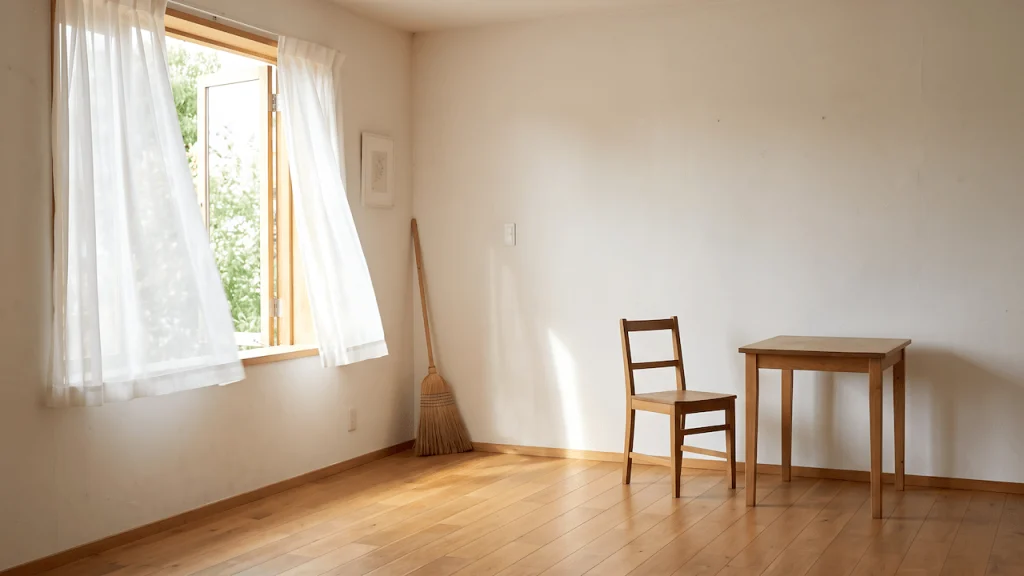
A Clean House Changes the Air You Breathe
Start with the part you can feel in your chest. A room that gets cleaned regularly holds less dust, and less dust in the air means you breathe easier, especially at night when you spend hours lying in it. The American Lung Association recommends regular dusting as part of improving indoor air quality, which is a polite way of saying that what settles on your shelves does not stay on your shelves.
Clutter makes this worse in a way most people never notice. Every pile, every stack of boxes and every chair holding clothes is another surface for dust to collect on and another obstacle the air has to move around. If you have ever searched how to reduce dust in your home, the answer starts with giving it fewer places to land. When I clear a room, the air moves through it again, and the stuffy, hot, heavy feel a crowded room gets in the afternoon goes away.
That matters even more if you live somewhere hot or somewhere the outside air turns bad. Bad air circulation in a house is not only a ventilation problem, and the fixes in how to keep cool without air conditioning work better in a room that is not packed wall to wall. When haze or smoke drifts in, an N95 mask protects you outside, but the dust you let settle indoors is a separate problem that only cleaning fixes. If you want extra help on top of a clean room, an air purifier for the bedroom catches what the broom misses, but it does not replace the broom.
What Clutter Does to Your Mind
A clean room also has a calming feel, and that is more than a mood. Every object in your line of sight is information. Your brain registers it, sorts it, decides it does not matter right now, and keeps doing that for as long as you are in the room. In a clean house there is simply less for the mind to process, so it can go where it actually needs to go.
There is research behind what most of us already feel. Work by Princeton neuroscientist Sabine Kastner found that visual clutter competes with the brain’s focus, and over time that competition wears you down. I do not need a lab to confirm it, because I can feel the difference between sitting down in a clear room and sitting down in a room full of unfinished business. One lets me start, while the other makes me negotiate with everything around me first.
This is the same load I wrote about on the systems side in why you can’t focus at work, and it is why a spring reset works as a system flush before you add anything new. It is not only visual, either. Sound adds to the pile, which is why the noise floor in a home office matters, and screens stack another layer on top, the kind covered in remote work screen fatigue and a digital detox for mental fitness. If you feel overwhelmed by clutter, that is your mind telling you the load is real, and the only way to declutter your mind is to stop feeding it the inputs.
Controlled Chaos and the Messy Genius Argument
Here is the counterargument, and it deserves a fair hearing. Are messy people smarter? Plenty of messy people are smart, and many of them can find exactly what they need in a pile that looks like chaos to everyone else. The study usually quoted for this comes from the University of Minnesota, where researchers led by Kathleen Vohs found that people working in a messy room came up with more creative ideas, while people in a tidy room made more conventional choices.
I had that phase, and I still let my desk get messy sometimes. A desk covered in notes and half finished work while I am in the middle of something is controlled chaos, and I know where everything is because I put it there. That is not what this post is about. When I talk about a clean house, I mean dirt and clutter, the things that pile up because nobody deals with them, not the working mess of someone in the middle of a task.
The difference shows up under stress. If you are used to clutter, your mind works harder to get used to it, and you stop noticing it because you have trained yourself to shut those parts off so you can focus on what is in front of you. That works until it doesn’t, and when stress builds, that adjustment breaks apart much faster than a clean space would. Shutting off parts of your attention just to cope is not focus, it is brain mismanagement, and it is not sustainable. The messy desk genius has a system, while a cluttered house is the absence of one.
Cleaning Your House Is Movement Your Body Needs
Then there is the part people forget, which is that cleaning is physical work. Sweeping, mopping, dusting, carrying laundry and moving furniture to get at what is behind it all count as movement. I work from home with my office upstairs and the kitchen downstairs, I clean my own house, and between the stairs and the household chores my body moves every day without me scheduling a single workout. I laid that system out in how to stay fit past January without a gym, and it is the same reason I count house cleaning as movement in the habits I actually keep.
Does cleaning count as exercise? It depends on how hard you work and what you compare it to. It does not replace training, and a slow afternoon of light dusting is not going to build strength. Compared to sitting, though, it is real movement, and past 40 the bigger problem for a lot of us is not too little intensity but too much stillness. Usable strength after 40 is about exactly that kind of strength, the kind you use carrying things and getting up off the floor, and daily chores keep it in use.
Cleaning also works as a reset between tasks. On the systems side, I described it in a survivable life routine as my physical reset, the thing that clears my body between work blocks without becoming another thing to track. If you have been away from exercise for a while, house chores are also a low stakes way back in before you try restarting exercise after 40 properly.
Where It All Lands: A Life With Less Stress
Put the pieces together and you get the reason the saying lasts. Cleaner air means you breathe easier, less clutter means your mind is not burning energy filtering the room, and doing the work means your body moved today. Add those up and you come home to a place that lets you rest, instead of a room that hands you a list of everything you have not done yet.
That is the emotional side, and it is the part people feel first and explain last. A messy house sitting in the background of every evening is low level stress that never fully switches off, and stress that never switches off does not stay in your head. It shows up in your body, the way I covered in how stress affects hypertension, and it is one of the reasons rest stops working the way it should when your surroundings never let you stop. Among the mental health benefits of cleaning, this is the one that matters most, because it is the one you feel every single night.
It runs both directions, too. When you are already running on empty, a messy house is often the result rather than the cause, and that is not laziness, it is survival mode. The answer is not a weekend overhaul but the smallest win that moves the room forward, the same logic behind micro wins that keep you from slipping back and burnout recovery while you are still working. If you work from home, the overlap gets tighter, because the same room holds your work and your rest, which is exactly how the remote work burnout trap and remote work mental burnout creep in.
How to Keep a Clean House Without Turning It Into a Project
None of this needs a cleaning schedule taped to the fridge. What works for me is small daily resets instead of one big weekend of house cleaning. Sweep the floor you walk on most, clear the surface you use most, and put things back where they live before the day ends.
Declutter first, then clean. Cleaning around piles just moves dust from one spot to another, while decluttering removes the places where it settles in the first place. Declutter your home one room at a time, starting with the room you spend the most hours in, which for most people is the bedroom or wherever they work.
The habit matters more than the method. I learned this from the chore system my mom ran on me as a kid, sweeping and mopping for a peso a task, which I wrote about in how to build a habit that actually sticks. The point was never the money, it was that cleaning stopped being a decision and became something I just do, and that is what keeps a clean house clean.
The Whole Picture
A clean house is a clean mind because the house was never separate from you. The air you breathe, the noise your mind filters, the movement your body gets and the stress you carry home all run through the same rooms. Fix the room and you are working on all four at once, which is more than most single habits can claim.
If breathing problems do not clear up in a cleaner room, or stress keeps building no matter what you change at home, talk to your doctor, because a clean house helps but it is not a diagnosis or a treatment. Start with the room you spend the most time in and notice how different it feels after a week. If that room is the one you sleep in, go through how to optimize your sleep environment next, because that is where clean air and a quiet mind pay off first.