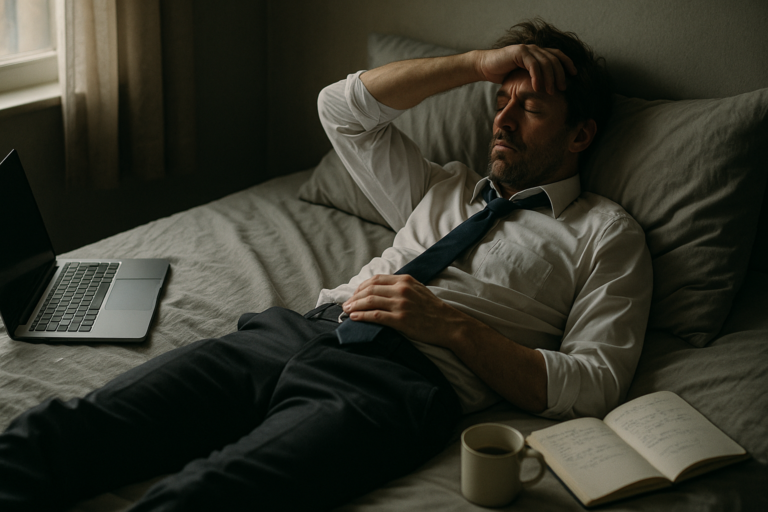
You woke up tired again. You stared at the ceiling for twenty minutes before your feet hit the floor. Your body feels like it skipped sleep entirely, even though you got eight hours. You didn’t do anything particularly hard yesterday. Nothing collapsed. Nothing exploded. And still, you’re running on empty before the day even starts.
This isn’t a motivation problem. It’s not a discipline problem. It’s what happens when your system has been running in crisis mode for so long that it stopped distinguishing between stress and normal life.
Survival mode isn’t a mindset. It’s a biological state, and your body doesn’t care whether the threat is a deadline, a difficult relationship, financial pressure, or just years of not stopping. It responds the same way regardless: conserve energy, reduce output, stay alert. That’s what’s happening to you. And no amount of morning routines or productivity hacks will override it until you understand what’s actually broken.

Your Brain Is Conserving Energy, Not Quitting
When you’re stuck in survival mode, your brain stops functioning like a planner and starts functioning like a guard. It strips out everything it considers non-essential and redirects resources to staying alert. Long-term thinking goes first. Deep focus becomes unreliable. Anything that feels optional gets cut, including joy, creativity, and motivation.
What’s left is the bare minimum. You log in. You reply with short phrases. You heat up food you don’t finish. You look functional from the outside while bleeding energy just to hold the line. This isn’t weakness. It’s a defense mechanism that evolved to keep you alive under genuine threat, and it’s misfiring because the threat never fully went away.
The cruel part is that the system doesn’t reset on its own. It waits for a signal that you’re safe. And if that signal never comes, because the bills don’t stop, the responsibilities don’t stop, the noise doesn’t stop, your body just keeps rationing. Every day it wakes up already in deficit.
The Wellness Industry Is Selling You Tools for People Who Aren’t Drowning
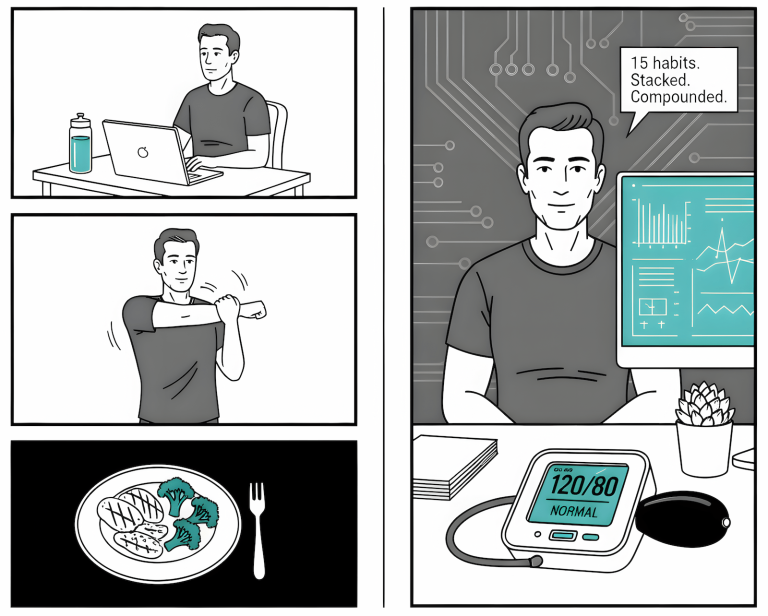
Here’s the lie that keeps circulating: you just need a better system. Wake up earlier. Track your macros. Add a workout. Cut caffeine. Build better habits. The logic sounds reasonable until you’re the person for whom brushing your teeth already costs something.
The tools being sold for fatigue and burnout are built for people who are slightly off their best. They’re tuned for optimization, not survival. If you’re already running at the edge of your capacity, adding a new protocol doesn’t give you energy it adds another thing you’re failing at.
Burnout doesn’t always announce itself dramatically. Sometimes it looks like watching hours of content you won’t remember. Sometimes it’s cleaning something small because it’s the only thing you can actually finish. Sometimes it’s doing exactly enough to not get noticed, then feeling guilty that you can’t do more. None of that is laziness. All of it is a nervous system trying to manage more than it was designed to hold at once.
What Carrying It Alone Does to You
For a lot of people, especially those who were raised to provide, protect, and lead without complaint, survival mode becomes the default operating state so gradually that they stop recognizing it. The weight doesn’t feel heavy anymore because you’ve been carrying it so long your body adjusted. You stop expecting to feel good. You just expect to function.
That recalibration is dangerous because it removes the signal. You no longer feel the warning. You just feel tired in a way that seems normal, until one day your system stops pushing entirely and you realize you haven’t actually rested in years. Not real rest. Not the kind where you wake up and feel like you have something left.
This isn’t about being weak. People who’ve been trained to endure tend to have the highest tolerance for sustained stress before they finally shut down. The problem is that when the shutdown comes, it comes hard, and it doesn’t respond to the same tactics that got you through everything else.
What Actual Recovery Looks Like at This Stage
Forget the transformation arc. That comes later. At this stage, recovery looks like triage, not optimization.
Your body has one immediate priority when it finally gets permission to stop: eat and sleep. Not clean eating. Not a sleep hygiene protocol. Just food when you can manage it and sleep whenever your body drops. This is the built-in failsafe. It’s your system saying the threat level is low enough to repair. Let it run.
After that baseline stabilizes, you add one small thing at a time. One short walk. One task you’ve been avoiding. One conversation you’ve been putting off, or deliberate silence if that’s what actually helps. The goal isn’t progress yet. The goal is stopping the bleed so your system stops treating ordinary life as an emergency.
If you’re at the point where the small changes stopped helping, that’s not failure. That’s a sign the problem is deeper than habit-level fixes can reach. The post on when small health changes don’t help anymore covers that specific wall in more detail.
You don’t need to explain your exhaustion to people who think you’re just not trying hard enough. You need your body to believe, through consistent low-threat signals, that it’s safe to start spending energy again instead of hoarding it. That process takes longer than a week. It takes longer than a month for most people. But it starts the same way every time: by stopping the thing that’s draining you faster than you can recover, even if only slightly, even if only temporarily.
You’re not lazy. You’re in survival mode. And the first step out of it is recognizing that those are not the same thing.