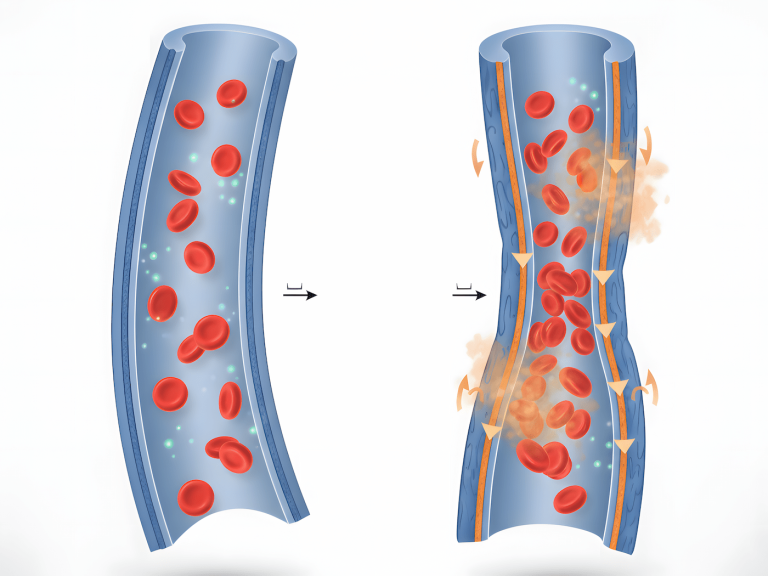
Hypertension is not a scare that arrives in one night. It is a slow accumulation of years of the wrong inputs: salt-heavy meals, sedentary stretches, family genetics that loaded the gun before you made a single decision, stress that never fully resolved, and a body that absorbed all of it quietly until the numbers on a blood pressure cuff stopped being ignorable. By the time a doctor writes maintenance medication on your record, the conversation has shifted. You are not preventing a problem anymore. You are managing one that is already built into your system.
The medication handles the baseline. Amlodipine relaxes the blood vessels and reduces the pressure your heart is working against. Atorvastatin lowers LDL cholesterol and stabilizes the arterial plaque that has been accumulating alongside the elevated pressure. Both are doing real and necessary work. What they are not doing is rebuilding the cardiovascular capacity that years of elevated pressure and lipid accumulation have eroded. That part requires something the prescription pad cannot provide.

Why High LDL and High Blood Pressure Are Not Two Separate Problems
Most men receive a hypertension diagnosis and a high cholesterol finding in the same bloodwork, and most of the time those two numbers get treated as separate problems requiring separate medications. The clinical picture is more integrated than that framing suggests.
LDL cholesterol accumulates as plaque inside the arterial walls. The mechanical effect of this is reduced arterial flexibility and a narrowing of the channel through which blood moves. Your heart now has to generate higher pressure to push the same volume of blood through a tighter and stiffer system. This is one of the mechanisms through which high LDL directly worsens hypertension. It is not just a parallel risk factor. It is a physical contributor to the pressure readings you are trying to manage.
Hypertension returns the damage in kind. Elevated pressure against already-compromised arterial walls accelerates the erosion of the endothelial lining, creating more sites where plaque can form and adhere. The two conditions are running a feedback loop against each other, and managing only one while ignoring the other is managing half of a system. Atorvastatin addresses the lipid side of this by lowering LDL production in the liver and stabilizing existing plaque so it is less likely to rupture. Amlodipine addresses the pressure side by reducing vascular resistance. Together they interrupt the loop pharmacologically. What they do not do is reverse the arterial stiffness that has already developed or rebuild the cardiac efficiency that sustained pressure erodes over time. That is where cardio enters the picture. For a detailed look at how diet, cholesterol, and the medications interact in daily practice, the post on managing hypertension after 40 covers the full operating picture.
Family History Means the System Started Behind
If your family history includes hypertension, cardiovascular disease, or early cholesterol problems, the starting point was not neutral. Genetic predisposition to arterial stiffness and elevated lipid production means the damage begins accumulating earlier and progresses faster than it would in someone without that inheritance. Men with this background often notice the first signs of reduced cardiovascular capacity in their early to mid thirties: slower recovery between physical efforts, reduced stamina during sustained exertion, and a baseline fatigue that did not exist a decade earlier. This is not simply aging. It is vascular deterioration arriving ahead of schedule.
The implication for management is that the lifestyle inputs that would have been optional for someone without this background become mandatory. Cardio is not a supplement to the medication for men with a family history of cardiovascular disease. It is the second half of the treatment. The medication manages what the genetics are doing to your baseline. The cardio manages what the genetics are doing to your capacity.
What Cardio Actually Does for a Hypertensive Heart
The cardiovascular benefits of sustained aerobic activity are not primarily about caloric expenditure, and framing cardio as a weight management tool misses the more important mechanisms for men managing hypertension.
Consistent aerobic activity improves cardiac efficiency. The heart learns to move more blood per beat, which means it does not have to work as hard to maintain circulation at rest. The resting heart rate drops. The resting blood pressure drops alongside it. This is a direct pharmacological-equivalent effect on the pressure readings, operating through a completely different mechanism than the medication. The two reinforce each other rather than overlapping.
Arterial flexibility is the second mechanism. Sustained aerobic activity stimulates the endothelium to produce nitric oxide, which is the primary signaling molecule for blood vessel dilation. Regular production of nitric oxide through exercise helps maintain and partially restore the arterial flexibility that plaque accumulation and sustained pressure work to reduce. It does not reverse existing plaque, but it counteracts the stiffening process that makes hypertension progressively harder to manage over time.
Recovery speed between physical efforts is the third mechanism and the one most directly experienced in daily life. A cardiovascularly trained heart returns to resting state faster after exertion. Stairs, carrying weight, physical labor, and any other demand that would have produced a sustained elevated heart rate and pressure spike in a deconditioned state become less of a cardiovascular event. The system handles load and recovers from it more efficiently.
None of this is achievable through medication. Amlodipine does not train the heart. Atorvastatin does not stimulate nitric oxide production. The pharmacological and the physical are doing entirely different jobs, and both need to be present for the recovery picture to be complete.
The Cardio Protocol That Works Without Breaking the System
The common mistake men with hypertension make when starting a cardio protocol is applying the same intensity and progression logic that worked for them in their twenties. High-intensity training produces transient BP spikes that are significant enough to be dangerous in men with uncontrolled or poorly controlled hypertension, and the recovery demand of high-intensity sessions places a load on a cardiovascular system that is already operating under stress. The protocol for hypertensive men is built around sustained moderate intensity, not peaks.
Brisk walking is the correct entry point for anyone who has been sedentary or who is starting cardio while blood pressure is still in the higher ranges. Twenty to thirty minutes of walking at a pace that elevates heart rate and breathing without making conversation difficult is a sufficient cardiovascular stimulus when done consistently. The benefit is not in the intensity of any single session. It is in the cumulative adaptation that consistent moderate stimulus produces over weeks and months.
Cycling, whether on a road bike or a stationary setup, provides a stronger cardiovascular stimulus without the joint impact of running and with the additional advantage of being easy to sustain at a controlled effort level. Twenty to forty minutes, three to four times per week, is the target range once walking tolerance is established. Adding short intervals within a cycling session, thirty to sixty seconds of higher effort followed by two to three minutes of recovery pace, accelerates the cardiac efficiency adaptation once the baseline is stable. The interval structure specifically trains the heart’s recovery speed, which is one of the more practically useful adaptations for daily life.
One practical note for cycling: saddle selection matters for men managing cardiovascular health. Long rides on a poorly fitting saddle compress the perineal nerves and blood vessels in ways that affect circulation below the waist. A cut-out saddle designed for anatomical relief is not a luxury item for a man using cycling as a cardiovascular rehabilitation tool.
Strength work supports the cardio protocol rather than replacing it. Two to three sessions per week of bodyweight fundamentals, planks, squats, pushups, and rows, maintain the muscle efficiency that supports cardiovascular output without placing the BP spike risk of heavy barbell training on the system. The goal at this stage is not hypertrophy. It is maintaining the physical structure that makes sustained cardio possible without breakdown.
Stress and Sleep Are Not Lifestyle Variables. They Are Blood Pressure Variables.
Men who take their medication consistently and build a solid cardio routine and still see inconsistent readings are usually dealing with the two factors that sit outside the standard advice: stress and sleep.
Chronic stress keeps cortisol elevated, which means sustained vascular constriction above whatever baseline the medication is trying to hold. A bad week at work does not just feel bad. It produces a measurable elevation in blood pressure that runs for the duration of the stress exposure and does not fully resolve until the stress does. For men whose work, family, and financial load runs at a consistently high level, this is not a periodic problem. It is a permanent overlay on top of the cardiovascular system’s baseline. The practical management of stress is not elimination, because elimination is not available. It is shortening the recovery time after high-load events through deliberate decompression, movement, and breathing work. The full mechanism behind how stress compounds hypertension is in the post on how stress affects hypertension and how to manage it.
Sleep is where the cardiovascular system’s recovery cycle runs. Blood pressure drops during deep sleep, reaching its lowest point in the early morning hours before waking. When sleep is disrupted, abbreviated, or fragmented, that overnight dip either does not happen or is shallower than it should be. The result is an elevated starting point the next morning, before the day’s load has even begun. Men with chronic sleep disruption are running their cardiovascular system without the nightly reset that allows the medication to work from a recovered baseline. Managing sleep as a cardiovascular intervention consistent timing, dark and cool environment, removal of screens before bed is not a wellness suggestion. It is a clinical input with measurable effects on morning readings.
What the Diet Conversation Looks Like After Diagnosis
The standard dietary advice for hypertension is to reduce sodium. That advice is not wrong, but it is incomplete in a way that leaves most men managing only one variable while the others continue unaddressed.
Sodium reduction matters and is worth doing, particularly by shifting away from processed food and condiment volume rather than eliminating dietary salt entirely. But for men already on atorvastatin, the cholesterol side of the dietary picture carries equal weight. Saturated fat from deep-fried preparations and fatty cuts drives LDL production independently of the medication. Atorvastatin lowers the liver’s output of LDL, but dietary saturated fat increases the input. The medication is more effective when the diet is not actively working against it.
For men eating a Filipino diet, this conversation is more specific than general advice allows for. The dishes that carry the highest cardiovascular load are the ones in the putok batok category the deep-fried fatty cuts, the organ meat preparations, and the high-sodium condiment combinations and the context in which they are usually eaten compounds the risk through alcohol, late-night timing, and volume. The post on Filipino food and blood pressure covers the dish-level breakdown of what is actually driving the cardiovascular load in a Filipino diet and what the practical dietary adjustments look like without eliminating the food culture entirely.
Hydration also belongs in the dietary picture for men on atorvastatin. Statins metabolize through the liver and require adequate fluid intake to process efficiently. On days involving heat, physical activity, or elevated stress, the hydration baseline needs active maintenance rather than passive assumption. Plain water addresses fluid volume. Electrolyte replacement addresses the mineral side of what heat and stress strip out. The post on electrolyte depletion covers the practical protocol for men who are drinking enough water and still running low on the minerals that make hydration functional.
The Full Stack in Practice
Managing hypertension with atorvastatin and amlodipine is not a passive process where the medication handles everything and the rest of life continues unchanged. The medication is the floor. Everything built on top of it either raises the ceiling or lowers it.
The stack that produces actual cardiovascular recovery rather than just stable maintenance looks like this. Medication provides the pharmacological baseline: amlodipine managing vascular resistance, atorvastatin managing lipid production and plaque stability. Cardio three to four times per week provides the cardiac efficiency and nitric oxide adaptation that no medication replicates. Dietary management on the saturated fat and sodium side reduces the load the medication has to compensate for. Sleep discipline preserves the overnight recovery cycle that the cardiovascular system depends on. Stress management shortens the duration of cortisol-driven pressure elevation after high-load events. And hydration with electrolyte maintenance keeps the system running cleanly between all of the above.
None of these inputs are complicated. All of them require consistency. The men who recover meaningful cardiovascular capacity after a hypertension diagnosis are not the ones who found a more aggressive treatment. They are the ones who stopped treating the medication as a ceiling and started treating it as a starting point.
For a complete view of the full maintenance protocol across all of these variables, the post on managing hypertension after 40 covers what the daily operating picture looks like for men who are already in the system and trying to stay ahead of it.