I’m already feeling the heat wave, and I can’t live in air conditioning all day. I have fans running around the clock, a humidifier going in the room, and I’ve been keeping myself hydrated, and it still isn’t enough to make the heat go away. If that sounds like your house, this is how to keep cool without air conditioning when the usual advice has already been used up.
PAGASA has warned about a very strong El Niño and the prolonged impacts that can come with it, which means this isn’t a one week event you wait out. That changes what the problem is. It stops being about comfort and becomes about keeping a room livable and keeping your body from failing in it.
One thing before the fixes. Gear reduces risk, it doesn’t treat heat illness, and heat stroke is an emergency. Nothing in this post replaces getting medical help when someone needs it.
How to Keep Cool Without Air Conditioning: Nine Fixes in the Order I’d Do Them
1. Cool your body before you cool the room
Cooling a whole room takes far longer than cooling yourself, so start with the body. Cold water on your face, neck and wrists, a cool shower, or a cold wet towel on the back of your neck all pull heat off you in minutes. It’s not a permanent fix, but it takes the pressure off while the room catches up.
2. Block the sun before it gets in
The cheapest way to make your room cooler is to stop the sun from heating it in the first place. Keep curtains or blinds closed on sun facing windows during the day, and open them only when the sun has moved off that side. If you’re asking how to cool down a room without AC, this is where the biggest drop usually comes from, because every hour of direct sun through glass is heat you then have to remove.
3. Use the fan for what it actually does
A fan moves air. It doesn’t remove heat from a room, and once the air itself is hot, moving it mostly moves hot air across your skin. Where a fan does help is evaporation, because moving air helps sweat leave your skin, and that’s what cools you. So point it at you, not at the room, and if you want to know how to cool down a room with a fan, put it in a window pulling cooler air in when the outside air is cooler than the inside, or pushing hot air out when it isn’t.
A humidifier is the one people forget about. Cool mist takes a little heat with it as it evaporates, but it also adds moisture to the air, and in humid weather that makes the room feel heavier while your sweat evaporates less. Use it in short bursts near the fan, and stop when the room starts to feel sticky instead of cooler.
4. Ventilate at night, but only if night is actually cooler
Open windows at night to let the heat out, and close them again before the sun comes up. This is one of the oldest answers to how to keep a room cool in summer, and it works when the night air is meaningfully cooler than your room. In a heat wave with hot nights it may not be, so check the outside air against the inside before you rely on it, and weigh security before leaving windows open while you sleep.
5. Stop making heat inside the house
Ovens, stovetops, dryers and electronics all dump heat into the room you’re trying to cool. Cook early or late, use the microwave or a rice cooker when you can, and turn off lights and devices you aren’t using. It sounds minor, but in a closed room those sources add up.
6. Use wet cooling on purpose
A damp cloth on your neck, a wet shirt, or a spritz of cold water on your clothes uses the same evaporation your sweat does, only with water you control. Do it where airflow can reach it, because a wet towel in dead air just gets warm. This is the cheapest version of the cooling towels you’ll see in the product section below.
7. Hydrate on a schedule, and replace what sweat takes out
Most people think hydration is the one thing they’ve already handled, and I thought the same. But by the time thirst registers, you’re already behind, which I covered when I wrote about daily water intake. Sweat carries sodium and other electrolytes out with it, and plain water doesn’t put those back, which is what I broke down in the electrolyte depletion fix.
Darker urine is the simplest warning that you’re behind. If you take blood pressure medication, have heart or kidney conditions, or have been told to limit fluids, talk to your doctor before pushing fluids or electrolytes harder. I’ve written about how high blood pressure in hot weather hits even inside the house, and the short version is that being indoors isn’t the same as being safe.
8. Know the warning signs, because they don’t look dramatic
Heat exhaustion looks like heavy sweating, weakness, dizziness, headache, nausea, or feeling faint. Heat stroke is the emergency version: confusion, fainting, a very high body temperature, and skin that can turn hot and dry because sweating stops. If someone is confused, collapses, or stops sweating while clearly overheated, call your local emergency number, and cool them down while you wait.
It also gets confused with other things. Fatigue, dizziness and a pounding head can look like several problems, and I covered how fatigue can mimic stroke or dehydration. If you aren’t sure, treat it as serious.
9. Sleep cooler
Sleep is where heat does the most quiet damage, because a hot bedroom stops you from recovering. Sleep on the lowest floor you have, use light breathable bedding, and put your fan where it moves air across the bed. For the rest of the setup, my post on optimizing your sleep environment covers the basics.
Where Fans, Humidifiers, and Water Stop Working
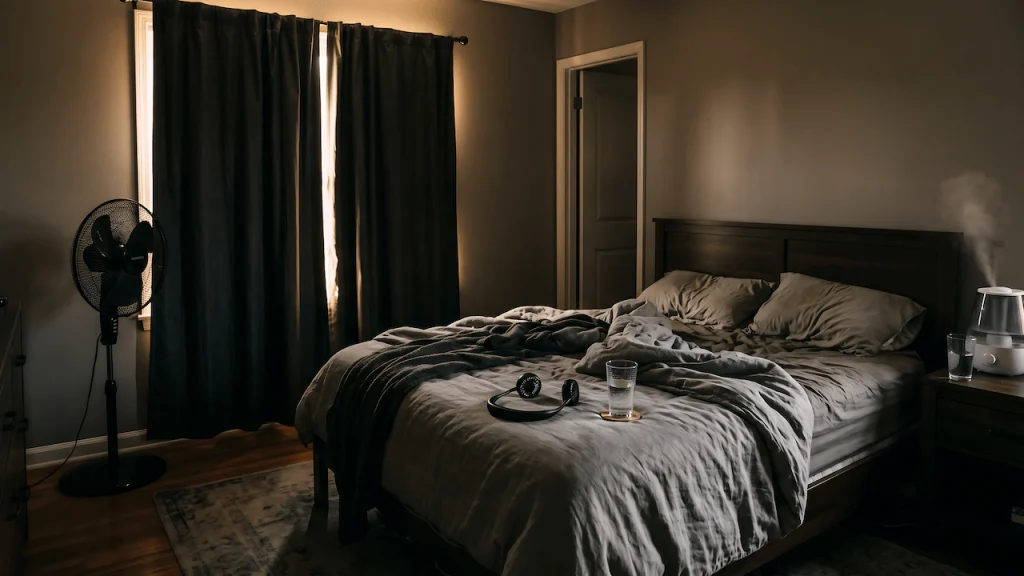
I have fans on all day, a humidifier running in the room, and I’m drinking plenty of water, and the room still isn’t getting cooler. Fans move hot air around, a humidifier adds moisture that can make the air feel heavier, and water keeps me hydrated without changing how much heat is coming in. What’s left is the heat getting in through the window, the heat sitting on my body, and what the heat drains out of me. Those are the three gaps, and each one has gear that fixes it.
This article has Amazon links. The obvious kind that connect to what we just talked about, not random products we pretend fit.
Buy through them = small commission for HealthyForge. Your price stays the same. Zero paid placements. Zero bullshit supplements.
☕ Or just support directly and cut out the middleman.
Fix the Gap, Not the Whole House
Quick pick: if you’re only fixing one thing, fix the heat coming through the window. Every other fix is working against it, because the sun you let in is heat you then have to remove. Start there, then add the body and fluid fixes.
| Gap | Product | Best for | Honest reason |
|---|---|---|---|
| Heat coming in | Thermal blackout curtains | Sun facing windows you can’t shade from outside | Insulated backing reduces heat through the glass, and they’re reversible if you rent |
| Heat coming in | Heat reducing window film | A permanent fix for a window that bakes all day | Reflects solar heat, but it’s harder to remove than curtains |
| Heat on your body | Neck fan | Hands free cooling when you have to go out or move around | Moves air across your neck, with the same limits as any fan |
| Heat on your body | Cooling towel | A cheap, quick cool down at the neck or wrists | Works by evaporation, so it works best when you wring it out and give it airflow |
| Heat at night | Cooling pillow and Bed cooling sheets | Hot sleepers who wake up sweating | Mostly act on surface contact, so they take the edge off but won’t fix a hot room |
| What sweat drains | Electrolyte powder | Long hot days and heavy sweating | Check the label for sodium per serving, and whether you’ll actually drink it |
Lever one: stop heat getting in
Thermal curtains and window film solve the same problem, with different tradeoffs. Curtains are reversible and cheap to try, and they only help for the hours the sun is actually hitting that window. Film is a permanent fix, so it makes more sense if the same window cooks the room every afternoon. If you’re searching for thermal curtains to keep heat out, look for a heavy, insulated backing and make sure they cover the full window.
Lever two: move heat off your body
A neck fan is the one that goes with you. A fan at home stays in one room, but when you have to go out, commute, or run errands in the heat, a neck fan keeps air moving across your skin. It won’t lower the temperature of the room, so think of it as protection for the hours you can’t stay inside. A cooling towel gives you a cheap hit of evaporative cooling, and it needs to be wrung out and given airflow to work.
For the night, a cooling pillow and bed cooling sheets can take the edge off if you wake up sweating. Be honest with yourself about what they do: they work on contact, they don’t cool the room, and a hot bedroom is still a hot bedroom.
Lever three: replace what heat drains
Electrolyte powder is the fix for the gap that water leaves, especially on days with a lot of sweating. Check the label for sodium per serving, and pick one you’ll actually drink on a schedule. If you want an insulated bottle that keeps your water cold through the day, I covered what holds up in my Stanley cups post.
Audit What You Already Have
You probably aren’t starting from zero. List what you already run, which for me is fans, a humidifier and water, and then look for the gap that’s left. If heat is coming through the windows, fix that first. If your body is overheating even with airflow, add the cooling items. If you’re sweating heavily, fix the fluids.
None of this replaces air conditioning when you can use it, and none of it replaces medical help when someone needs it. What it does is keep a room livable and your body working through a long stretch of heat. For the cultural side of how people get through this, I wrote about how Filipinos survive the summer heat.