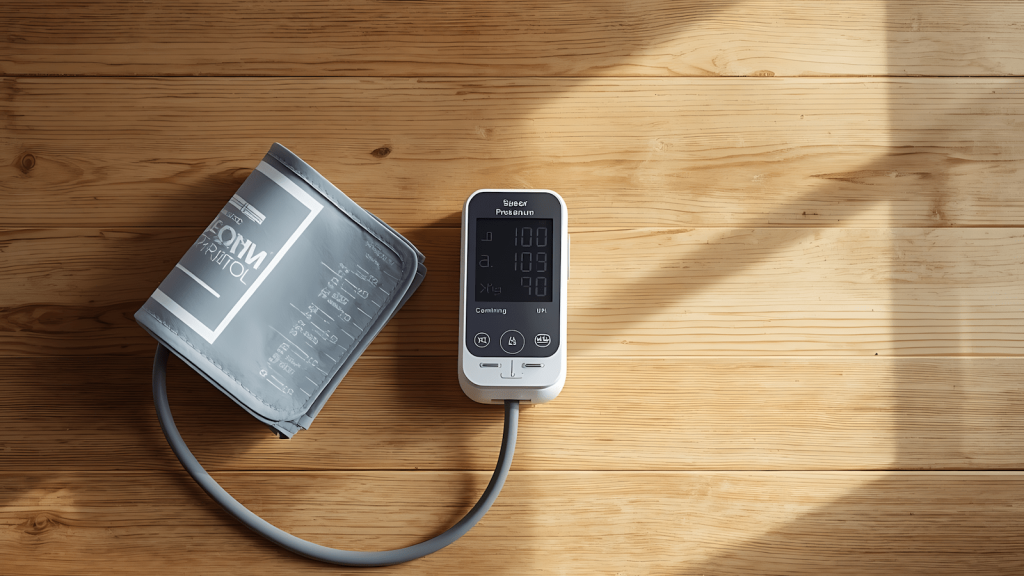
If you are on maintenance medication for hypertension and checking your blood pressure at home, the reading you get is only useful if the device giving it to you is accurate enough to act on. Most monitor roundups are written for people who are curious about their numbers. This one is for people who already know what their numbers mean and need a home blood pressure monitor for hypertension that holds up to daily use alongside a real treatment plan.
This article has Amazon links. The obvious kind that connect to what we just talked about, not random products we pretend fit.
Buy through them = small commission for HealthyForge. Your price stays the same. Zero paid placements. Zero bullshit supplements.
☕ Or just support directly and cut out the middleman.
Why Most Monitor Roundups Miss the Point for Men Already Diagnosed
When Consumer Reports or a pharmacy chain publishes a blood pressure monitor guide, the target reader is someone shopping for a health gadget, maybe for the first time, maybe after a borderline reading at the doctor. That is a fine audience. It is not this audience. Men over 40 who are already managing hypertension, already taking medication daily, and already tracking readings as part of an active treatment plan have different requirements than someone who wants to spot-check occasionally.
The difference matters because the stakes are not the same. If your monitor gives a reading that is slightly off on a day you are just curious, nothing happens. If your monitor gives a reading that is off when you are trying to figure out whether a new medication is working, or whether a spike you logged last week was real, or what to tell your doctor at your next appointment, the wrong number is a problem. A home blood pressure monitor for hypertension has to be reliable enough to function as a clinical tool, not just a consumer device. That is the standard this post is applying.
The Validated Device List and Why It Matters
Before buying any monitor, check whether it appears on the U.S. Blood Pressure Validated Device Listing, maintained by the American Medical Association. Validation means the device has been independently tested for accuracy using a standardized protocol. It is not a brand reputation score or a star rating aggregation. It is the closest thing available to a clinical stamp of approval for a consumer device.
The reason this matters more than most roundups acknowledge is that the majority of bestselling monitors on Amazon are not on the validated list. Research published in JAMA found that most of the top-selling devices on Amazon in the United States had not been validated for accuracy. Bestseller rank reflects sales volume, not measurement quality. A device can sell extremely well and still produce readings that are clinically unreliable. When you are managing hypertension and trying to determine whether your numbers are trending in the right direction, you need a monitor that has been held to an actual accuracy standard.
Checking the validated device list takes about two minutes before any purchase. If the monitor you are considering is not on it, that is a meaningful data point. It does not automatically disqualify a device, but it means you are buying on faith rather than evidence, and that is not a trade worth making when the readings matter.
What to Actually Look for in a Home Blood Pressure Monitor for Hypertension
Beyond validation status, several features separate monitors that are genuinely useful for daily hypertension management from ones that look adequate in a product listing but fall apart in practice.
Upper arm, not wrist. Wrist monitors are less accurate than upper arm monitors and the American Heart Association does not recommend them for home blood pressure tracking. The distance from the heart and the sensitivity of the wrist to positioning errors makes the readings less consistent. If you are tracking readings over time and comparing them across days and weeks, you want an upper arm cuff. This is not a preference issue. It is an accuracy issue.
Cuff fit matters more than people think. A cuff that is too small gives readings that are artificially high. A cuff that is too large gives readings that are artificially low. Most standard monitors come with a medium cuff that fits arms in a certain range. If your arm circumference falls outside that range, a standard cuff will give you inaccurate readings regardless of how good the device is otherwise. Check the listed cuff range before buying and measure your arm if you are not sure. Large cuff options are widely available and should be the default consideration for most men over 40 who are not small-framed.
Memory and logging. If you are tracking your numbers for clinical purposes, a monitor that stores readings matters more than one that just displays them. Look for at least 60 readings of storage per user, ideally more. Some models store readings for two users, which is useful if a partner is also tracking. Models with Bluetooth sync to a smartphone app make it easier to share logs with your doctor, which is genuinely useful at appointments rather than showing up with handwritten numbers or nothing at all.
Irregular heartbeat detection. Many upper arm monitors now include an alert when an irregular heartbeat is detected during a reading. This feature does not diagnose arrhythmia. What it does is flag readings that may be less reliable because irregular rhythm can throw off the oscillometric measurement method most home monitors use. If you are also managing conditions that affect heart rhythm, this feature is worth having.
The Monitors Worth Using
These picks are selected based on validated device listing status, cuff size range, memory capacity, and overall clinical reliability. All links are Amazon Associates links.
| Monitor | Validated | Cuff Range | Memory | Assessment |
|---|---|---|---|---|
| Omron Platinum BP5450 | Yes | 9 to 17 inches | 200 readings (2 users) | Best overall for daily tracking. Bluetooth sync, two-user storage, widely validated. The standard against which others are measured. |
| Omron Evolv BP7000 | Yes | 9 to 17 inches | 100 readings | Cuffless tube design makes it easier to use solo. Accurate, compact, and validated. Good option if you travel with it regularly. |
| A&D Medical UA-651BLE | Yes | 8.7 to 16.5 inches | 60 readings | Reliable, no-frills upper arm monitor with Bluetooth. Validated and well-regarded in clinical settings. Solid choice if you want something straightforward. |
| Withings BPM Connect | Yes | 9 to 21 inches | Unlimited (app-based) | Strong option for men who want long-term trend tracking. App stores unlimited readings. Larger cuff option available. |
The Omron Platinum is the default recommendation for most men managing hypertension at home. It has been validated, it holds readings for two users, and the Bluetooth sync makes it easy to bring your log to doctor appointments without manually writing anything down. The A&D Medical is a strong alternative if cost is a consideration and you do not need the full Omron feature set.
For more on how to use these readings effectively in the context of a broader hypertension management approach, the post on managing hypertension after 40 covers the full protocol, including what your numbers at home should actually look like compared to your in-office readings.
Electrolyte Products Worth Keeping Nearby
If you are on antihypertensives, particularly diuretics or calcium channel blockers, electrolyte loss is a real variable that affects both how you feel and how your readings behave. Dehydration and low electrolytes can spike readings or make you feel like your medication is not working when the actual problem is fluid balance. Keeping an electrolyte product on hand is not a treatment strategy, but it is a practical buffer for the days when heat, travel, or a hard workout throws off your baseline.
The post on electrolyte depletion and blood pressure goes into the specifics of what to replace and why, but for a quick reference here, the products that are worth having available are the ones with sodium, potassium, and magnesium together rather than just sodium alone. LMNT and Liquid IV both carry Amazon listings and work for most use cases. Neither is a replacement for what your doctor has prescribed. They are tools for staying stable on the days when conditions are not ideal.
A Few Habits That Make Home Monitoring More Useful
The monitor is only as useful as the readings you take from it, and readings taken under inconsistent conditions are not comparable to each other. Sit quietly for at least five minutes before measuring. Take readings at the same time each day, preferably morning before medication and evening before bed. Take two or three readings in succession and log the average rather than the first number. Do not measure immediately after caffeine, exercise, or a stressful event.
These are not complicated protocols. They are the same guidance your doctor gives and most people ignore because the monitor does not come with instructions that emphasize why consistency matters. If your readings are not consistent, the problem is usually technique or timing before it is the monitor. The posts on stress and hypertension management and blood pressure in hot weather cover two of the most common environmental variables that knock readings around in men who are otherwise managing well.
If you are also in the process of recovering from a cardiovascular event or navigating medication adjustments, the post on cardio recovery alongside atorvastatin covers what the monitoring picture looks like during that process specifically.
The Bottom Line
A blood pressure monitor for hypertension management is not the same purchase as a blood pressure monitor for general wellness curiosity. The validation status, the cuff fit, and the logging capacity all matter more than they do for someone who checks occasionally. Get a validated upper arm monitor with memory storage, take readings consistently, and use the log to have better conversations with your doctor. The number on the screen is only useful if the device producing it is trustworthy.