Filipino food and high blood pressure is a conversation that happens in the car on the way home from the doctor, not in the exam room. You got told to watch your diet, maybe watch your sodium, and that was about it. What you didn’t get was a straight answer about whether you can still eat crispy pata at the next family gathering, whether the dinuguan your tita makes is actually off the table, or why your numbers keep climbing even though you swore you cut back on salt.
The reason that conversation never happened is that Filipino food and blood pressure requires a dish-level answer, not a cuisine-level one. The foods on the putok batok list, the ones everyone jokes will blow out your arteries, work through completely different biological mechanisms. Some are a sodium problem. Some are a cholesterol problem. Some are a purine problem that has nothing to do with how much salt you used. And one of the biggest drivers at the table isn’t the food at all. Understanding which mechanism applies to which dish is what actually changes your numbers.
Why Filipino Americans Have the Highest Hypertension Rates of Any Asian Subgroup
This is not a minor statistical footnote. Research from a large Northern California health system found that Filipino men had an age-adjusted hypertension prevalence of nearly 60 percent, higher than any other Asian subgroup studied and comparable to rates seen in Black Americans. Filipino women were not far behind. What makes this more concerning is that awareness and treatment rates in the Filipino community have historically been among the lowest across all Asian groups. Many people are walking around with blood pressure that needs management and don’t know it yet.
The dietary connection is real and well-documented. Filipino cuisine, as it is actually eaten, not as it appears in a nutrition textbook, combines high-sodium condiments, organ meats, deep-fried preparations, and frequent alcohol in the same sitting. That combination is not theoretical. It shows up in the cardiovascular outcomes data. Knowing which parts of the diet are doing the most damage, and which ones have an unfair reputation, is the starting point for making changes that last.
The Three Mechanisms Behind Filipino Food and High Blood Pressure
Before going dish by dish, it helps to understand that high blood pressure has more than one dietary driver, and Filipino food happens to hit several of them in concentrated ways.
The first is sodium. Sodium raises blood pressure by increasing blood volume, and the effect is relatively fast. Patis, toyo, bagoong, Mang Tomas, and most marinades are high-sodium by default. This is the mechanism most people know about and the one doctors usually mention.
The second is saturated fat and cholesterol. This is a slower, cumulative mechanism. Saturated fat raises LDL cholesterol, which contributes to arterial plaque buildup and arterial stiffness over time. It does not spike your blood pressure the same afternoon you eat lechon, but it compounds cardiovascular risk steadily over years of regular consumption.
The third is purines and uric acid, and this is the one most people miss entirely. Organ meats are extremely dense in purines, which the body metabolizes into uric acid. Elevated uric acid causes vascular stiffness through a separate pathway from sodium. This is why some people who genuinely do cut their salt intake still see their blood pressure stay elevated. If they are eating offal regularly, the uric acid mechanism is running in parallel. The two reinforce each other when sodium intake is also high, making the combined effect worse than either alone.
Most high-risk Filipino dishes hit two or three of these mechanisms simultaneously.
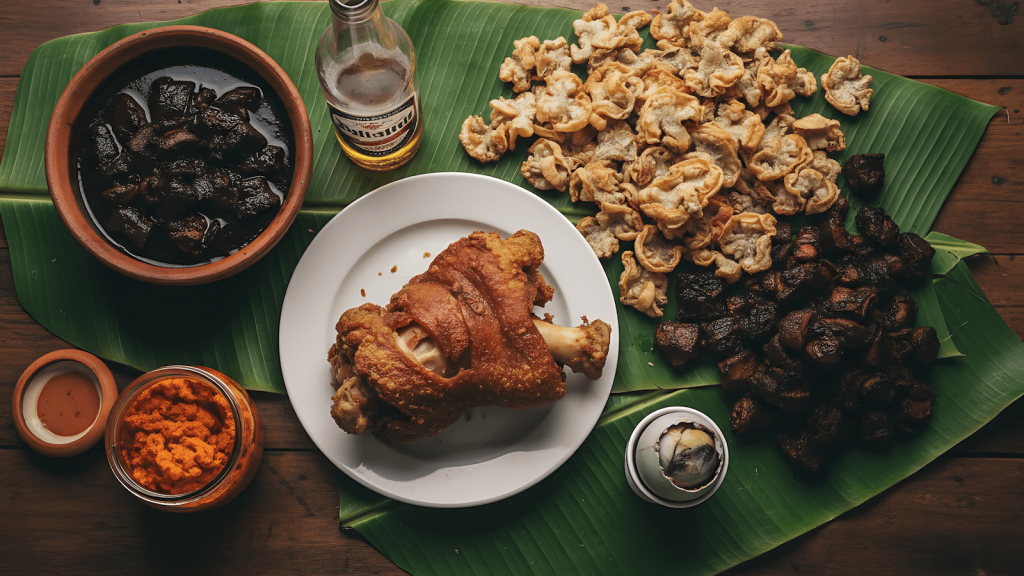
The Fatty Cuts: Crispy Pata, Lechon, Bagnet, Lechon Kawali
These are the dishes most people picture when they hear putok batok, and the reputation is partly earned. The primary mechanism here is saturated fat and cholesterol, not sodium alone. During deep frying, the tissue absorbs significant amounts of oil, which adds to the already high fat content of pork belly and pork leg. The result is a dish that is dense in both saturated fat and dietary cholesterol.
The important nuance is that this is a cumulative mechanism, not an acute one. Eating crispy pata at a birthday party is not the same cardiovascular event as eating it three times a week. The problem is when these dishes move from occasion food to regular rotation.
The sodium angle that people consistently underestimate is the sawsawan. Mang Tomas and lechon sauce are used in the quantities people actually pour at the table, not the tablespoon portion listed on the label. The marinade and brine used in preparation also carry sodium that does not disappear after cooking. If you are managing blood pressure and you do eat these dishes, the dipping sauce is doing more sodium work than most people account for. For men already on atorvastatin managing both LDL and blood pressure simultaneously, the post on how LDL buildup and cardiovascular recovery interact covers what the medication is actually doing and what cardio adds on top of it.
The Innards: Chicharon Bulaklak, Dinuguan, Papaitan, Bopis, Isaw, Proben
This is the highest-risk category for anyone with existing hypertension, and the reason is the purine mechanism described above. Organ meats, including intestines, lungs, heart, liver, and congealed blood, are among the most purine-dense foods in any cuisine. Regular consumption raises uric acid levels, which stiffens blood vessels independently of how much sodium you ate.
Chicharon bulaklak is pork mesentery and intestines deep-fried in oil or lard. It is high in cholesterol, high in purines, and the vinegar sawsawan it is served with masks the fat taste well enough that portions climb higher than people realize. It is almost always eaten as pulutan, which means the beer arrives with it.
Dinuguan takes the organ meat problem further. It is pork blood stewed with intestines and other innards in a preparation that is typically high in sodium as well. It hits the sodium mechanism, the cholesterol mechanism, and the purine mechanism in the same bowl. People with existing hypertension and people managing gout are often told to limit it for overlapping reasons.
Papaitan is offal and bile simmered together, and the intense bitter flavor masks how much salt is in the broth. It is easy to eat a full bowl without registering the sodium load because the bitterness dominates the palate.
Bopis is pork lungs and heart sautéed with chilies and tomatoes. The heart is particularly purine-dense. The lungs add cholesterol. It is formally classified as pulutan in Filipino cuisine, which means it is designed to be eaten with alcohol. That classification is not incidental to the blood pressure conversation.
Isaw and proben are the streetfood versions of the same problem. Chicken intestines and chicken proventriculus on skewers, deep-fried, eaten in multiples per session, almost always with beer. The individual stick looks small. The session does not.
The consistent thread across this entire category is that these dishes are eaten in social contexts that include alcohol. That context is not separate from the blood pressure question.
Aligue, Fish Eggs, and Balut: The Concentrated Cholesterol Problem
These three are different from the fatty cuts and the innards in one important way: the portion sizes are small, which is why people do not register them as the cardiovascular loads they are.
Aligue, or taba ng talangka, is crab roe and tomalley combined into a paste. The cholesterol concentration is extremely high. Three tablespoons of crab roe contains more cholesterol than the American Heart Association’s older daily ceiling of 300 milligrams. Aligue is typically used as a topping over rice or stirred into pasta, and the portion that ends up on a plate is rarely measured. When it is eaten frequently, the cumulative cholesterol load is significant.
Fish eggs follow the same pattern. Eaten in small amounts by convention, but the convention does not always hold at a family table where a dish is being shared across rice.
Balut is nutritious by several measures, but a single egg contains roughly 600 milligrams of cholesterol. Eating one occasionally is a different situation from eating one or two daily, which is common practice in some households. Daily consumption adds a consistent cholesterol load on top of everything else in the diet. People managing gout also have a specific reason to limit balut because the protein density contributes to uric acid production.
What makes these three foods particularly easy to underestimate is that they do not look like the heavy dishes people associate with blood pressure problems. Aligue on rice looks like a condiment. Balut looks like a snack. The risk is in frequency and the fact that people do not count them as cholesterol events when they are totaling up what they ate.
The One That Gets Blamed Unfairly: Kilawin Kambing
Goat meat itself is leaner and lower in cholesterol than pork. Research on goat consumption does not support the idea that it inherently raises blood pressure. The kilawin preparation, vinegar, ginger, onion, and calamansi, is actually one of the lower-sodium cooking methods in Filipino cuisine.
The blood pressure problem with kilawin kambing is contextual, not intrinsic. When the recipe includes liver, the purine load goes up significantly. When it is served as pulutan, which it almost always is, it arrives alongside several bottles of beer. The beer is doing more acute blood pressure work in that setting than the kambing.
Plain kilawing kambing eaten as a meal, without liver, and without the drinking session, is a moderate-risk dish at most. Its reputation as a putok batok food is largely a reputation about the company it keeps at the table.
Beer Is a Bigger Driver Than Most of the Food
This is the part of the Filipino food and blood pressure conversation that consistently gets avoided. Research published by the American Heart Association found a clear, dose-dependent relationship between alcohol consumption and systolic blood pressure increases in men. The systolic number climbs with each additional drink. It is not a subtle effect.
There is also a rebound mechanism that people do not know about. Blood pressure can actually spike higher in the 12 hours after heavy drinking than it was during the drinking session. The next-morning reading after a pulutan night is often the worst reading of the week, not because of the crispy pata, but because of the beer.
Filipino pulutan culture is designed around foods that go well with alcohol. Chicharon bulaklak, bopis, isaw, dinuguan, kilawin kambing, these are not coincidentally the same foods on the blood pressure concern list. They are eaten together, at night, in quantities that are difficult to moderate because the social context does not support individual portion tracking. When heat is also in the picture, as it almost always is in a Philippine or tropical summer context, the cardiovascular load compounds further. A body already working to manage heat-driven vasodilation does not need the added BP burden of a five-bottle pulutan session on top of it. What that actually looks like from inside a hypertensive body during a hot Philippine afternoon is documented in the post on high blood pressure in hot weather.
Separating the food from the drinking session changes the risk profile of almost every dish on the Filipino food and blood pressure concern list. Crispy pata at lunch with water is a different cardiovascular event from crispy pata at 10 PM with six bottles of beer.
What This Actually Means If You Are Managing Blood Pressure
The most useful thing a doctor can do for a hypertensive patient is not hand them a banned foods list. A banned foods list does not work. You know what happens when a food is off-limits and the doctor is not in the room: you eat it anyway, and you tell yourself the medication will cover it. That is not management. That is avoidance cosplaying as discipline.
What works is cause and effect. You eat crispy pata at the birthday party. You know it is a saturated fat and cholesterol event, not an acute sodium spike. You know the sawsawan is where the real sodium is. You pour less. You skip the extra round of beer. You go for a walk the next morning and you drink more water than usual. That is not restriction. That is information running a feedback loop.
The framework is straightforward. Eat the food. Know what it does. Gauge the quantity. Move afterward. Hydrate. Let the medication do its job as the floor, not as the ceiling that covers whatever you ate.
Rice belongs in this conversation too, and most posts about Filipino food and blood pressure leave it out entirely. White rice is high glycemic and eaten in the volumes most Filipino households serve it, it adds a meaningful carbohydrate load on top of every dish on this list. Moderating rice portions is not about eliminating rice. It is about the same principle: knowing the load and adjusting accordingly. A smaller rice portion with the same ulam is not a lesser meal. It is the same meal with less of the variable that was doing the quiet damage.
The full operating picture looks like this. Medication holds the baseline. Food quantity and quality determine how hard the medication has to work. Movement, even a thirty-minute walk, has a measurable effect on blood pressure and helps process what you ate. Hydration keeps blood volume stable and supports everything else in the system. None of these work in isolation. All of them work together with the information from this post running underneath.
For the full protocol on how medication, lifestyle, and daily habits interact for men already managing hypertension, the post on managing hypertension after 40 covers what maintenance actually looks like from the inside.