If you’ve treated jock itch and it came back within weeks, the treatment didn’t fail because you used the wrong product. It failed because you stopped too early, left the fungus enough of a foothold to rebuild, and probably didn’t change the conditions that let it take hold in the first place. Why does jock itch keep coming back is the question people ask after the second or third relapse, and by then the frustration has moved past “what cream do I use” into wanting to actually understand what’s happening so it stops happening.
What Jock Itch Actually Is
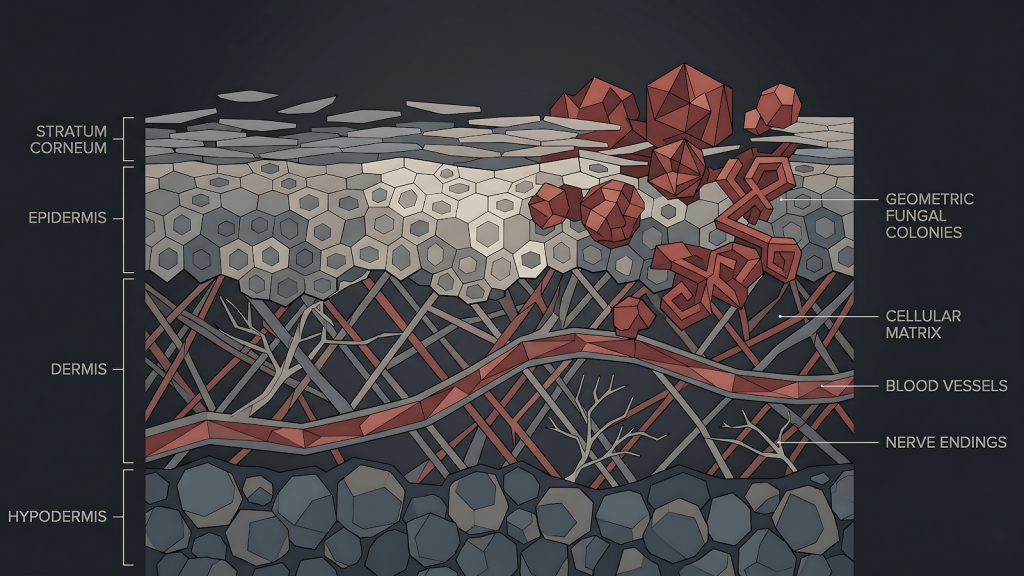
Jock itch is a fungal infection caused by dermatophytes, the same family of fungi responsible for athlete’s foot and ringworm. The specific organisms are usually Trichophyton rubrum or Epidermophyton floccosum, both of which thrive in warm, moist environments with limited airflow. The groin area is essentially optimal fungal habitat: heat trapped by clothing, skin folds that stay damp, and friction that breaks down the skin barrier and gives the fungus a way in. The infection typically presents as a red, scaly, ring-shaped rash along the inner thighs and groin folds with a clearly defined border and an itch that ranges from mildly annoying to genuinely maddening depending on how far it’s progressed.
The thing most people don’t understand is that dermatophytes don’t disappear on their own. They go dormant. They retreat to a subclinical level where they’re not causing visible symptoms, but without antifungal treatment run to completion, the colony remains in the skin and re-emerges when conditions favor it again. This is the core mechanism behind why jock itch keeps coming back: the infection was suppressed, not eliminated.
When It Gets Serious
Most jock itch coverage stops at the mild-to-moderate stage, which is fine until yours doesn’t stay mild. Left undertreated long enough, jock itch can progress to the point where the skin breaks down significantly, secondary bacterial infections move in on top of the fungal one, and what started as an itch becomes something closer to open sores or boils in the groin area. That stage is genuinely painful in a way that’s hard to overstate. Sitting is uncomfortable. Walking creates friction on raw skin. The itch becomes a burn.
At that severity, a warm salt bath for ten to fifteen minutes works as both a soother and a mild antimicrobial measure. Sitting in the tub and letting the saline solution do its work reduces inflammation, cleans the broken skin surface, and provides real relief without introducing anything harsh to already compromised tissue. Aloe vera applied directly to the affected area after the bath helps calm the inflammation further and creates a light barrier. These aren’t replacements for antifungal treatment, but they make the acute phase survivable while the treatment does its work. Cornstarch-based powder, not talc, helps keep the area dry between applications and reduces the friction that makes inflammation worse during recovery. The goal at that stage is managing acute discomfort while the underlying infection gets cleared.
Why It Keeps Returning After Treatment
The most common reason jock itch returns is stopping treatment when symptoms cleared rather than when the infection was actually gone. Antifungal creams disrupt the fungal cell membrane, but fungal infections resolve more slowly than the visible symptoms suggest. The itch and redness clear before the fungus is fully eliminated from the skin. Stop applying cream at that point and the surviving colony rebuilds. Most people count their two weeks from day one of application rather than from the day the rash visibly resolved, which means they’re stopping a week or more too early.
The second reason is reinfection from a concurrent source. Jock itch and athlete’s foot are caused by the same organism and frequently co-exist. If you have both and treat one without the other, you’re reinfecting the groin through the same dressing routine every morning. Feet pass through underwear when you dress, fungal material transfers to fabric, fabric contacts the groin. It’s a loop with no exit unless both infections are treated simultaneously. The third reason is persistence in fabric. The fungus survives in the seams of underwear and workout shorts washed at temperatures too low to kill it, and reintroduces itself every time you dress.
What Actually Helps
Switching to boxers or looser underwear during an active infection is one of the more effective adjustments you can make. It’s not that loose fabric is antifungal. It’s that airflow is the fungus’s enemy, and tight synthetic fabric traps heat and moisture and keeps the environment exactly where the fungus wants it. Loose cotton or genuinely breathable fabric changes those conditions enough to slow fungal proliferation while treatment runs.
Ketoconazole shampoo applied to the affected area during bathing is a less discussed but genuinely effective complementary measure. Ketoconazole is a broad-spectrum antifungal and the same active ingredient found in dedicated antifungal treatments. Lathering it onto the groin area, leaving it on for a few minutes before rinsing, delivers antifungal activity directly to the skin surface as part of the wash routine. It’s not a substitute for a topical cream that stays on the skin, but as a daily complementary measure it adds another intervention layer. Antibacterial soap helps manage the secondary bacterial load, particularly if skin breakdown has allowed bacterial opportunists to establish alongside the fungal infection.
For the topical treatment itself, antifungal creams containing clotrimazole, miconazole, or terbinafine are effective for most cases. Apply to the affected area and extend two centimeters beyond the visible rash edge. Continue for at least two weeks past visible resolution. Wash all underwear in hot water during the treatment period. If you’re also dealing with athlete’s foot, treat it at the same time with the same antifungal class or the loop doesn’t close. If you want to understand more about how your body’s moisture regulation and overall system health affects skin recovery, the electrolyte and hydration protocol on HealthyForge is worth reading alongside this.
The Short Version
Jock itch keeps coming back because treatment was stopped too early, because concurrent athlete’s foot is reinfecting the groin through the dressing routine, or because the environment that favors the fungus hasn’t changed. Switch to looser underwear, use ketoconazole shampoo as part of your wash routine, run the topical antifungal past visible resolution, treat any concurrent athlete’s foot simultaneously, and hot-wash underwear throughout the treatment period. If it’s already at the painful skin-breakdown stage, warm salt baths and aloe vera manage the acute discomfort while treatment clears the infection underneath. It’s fixable. It just requires finishing the job.