This article has Amazon links. The obvious kind that connect to what we just talked about, not random products we pretend fit.
Buy through them = small commission for HealthyForge. Your price stays the same. Zero paid placements. Zero bullshit supplements.
☕ Or just support directly and cut out the middleman.
The wellness industry has a branding problem, and you’re paying for it. Walk into any sporting goods store and the shelves are stacked with products that cost three times as much as they should, mostly because there’s a logo on them and a lifestyle photoshoot behind them. Budget fitness gear for home doesn’t need to come from a premium label to function correctly. Resistance is resistance. Foam is foam. A jump rope that spins smoothly does its job whether it’s branded or not.
The actual problem isn’t that cheap gear fails. It’s that people don’t know how to tell cheap-but-functional from cheap-and-garbage. There’s a difference between a resistance band that’s been rated to hold tension and one that’s going to snap across your face on rep three. The way to navigate that is to look past the marketing and focus on construction specs, material ratings, and return frequency in reviews. That’s it. You’re not evaluating a lifestyle, you’re evaluating a tool.
What Budget Fitness Gear for Home Actually Needs to Do
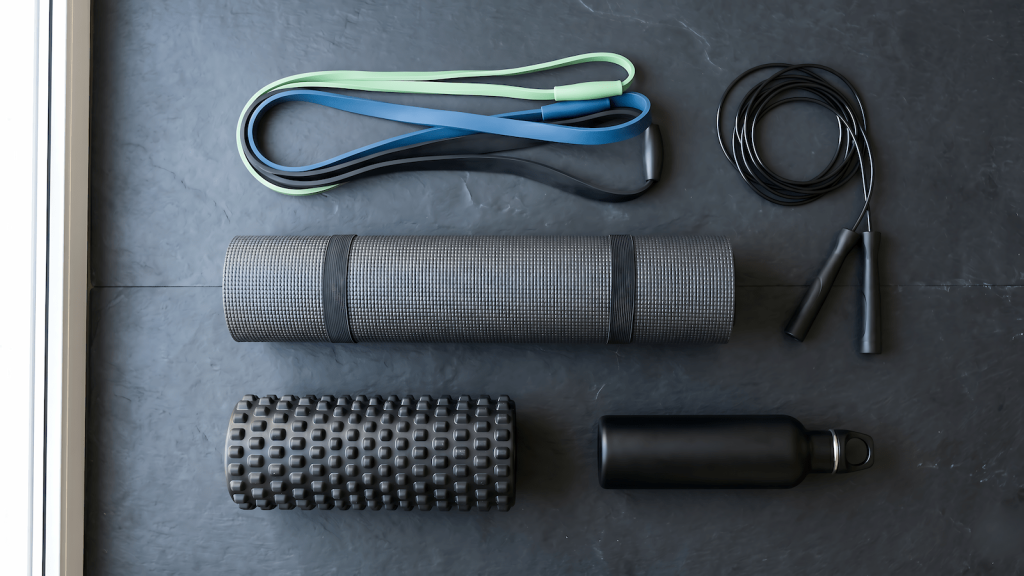
The bar is lower than the industry wants you to think. Home wellness gear needs to hold its structural integrity under repeated use, be easy to store, and not require a maintenance routine. That’s the standard. A resistance band needs consistent tension across its full range of motion. A yoga mat needs enough grip that you’re not sliding into furniture during a plank. A foam roller needs density, not branding. Everything else is noise.
Where most people go wrong is spending money on gear that solves a problem they don’t have. A $200 smart jump rope does not make your cardio more effective than a $12 one. The sensor data is a feature for people who are already committed enough to use it, not a feature that creates commitment. If you’re trying to build a fitness routine that survives past the first month, start with the gear that removes friction, not the gear that adds features.
Amazon Basics and Amazon Essentials cover most of the foundational categories at functional price points. The products aren’t flashy but they are consistent, they have return volume that reveals actual failure rates, and the specs are straightforward. For budget fitness gear for home, that combination matters more than brand identity.
The Gear List
These are the categories worth spending on and what to look for in each. This post contains affiliate links. If you buy through them, I earn a small commission at no extra cost to you.
| Product | Key Spec | Honest Take |
|---|---|---|
| Amazon Basics Resistance Band Set | Multiple resistance levels, loop and tube options | Consistent tension, no snap issues reported at normal use levels |
| Amazon Basics High-Density Foam Roller | 12″ or 18″, firm density | Does the job on IT bands and thoracic spine, no give under body weight |
| Amazon Basics Jump Rope | Adjustable length, ball bearings | Smooth rotation, holds up to daily use, nothing more and nothing less |
| Amazon Basics Yoga Mat | 6mm thickness, textured surface | Adequate grip on most floor surfaces, not premium but not embarrassing |
| Amazon Basics Water Bottle | BPA-free, 32oz | Keeps volume in check, wide mouth for ice, dishwasher safe |
| Amazon Essentials Sleep Mask | Contoured foam, adjustable strap | Blocks light without pressing on eyes, good if you run hot at night |
What to Skip
Skipping things is half the setup. You don’t need a smart scale if you’re not tracking trends over months. You don’t need a foam roller with a vibration motor unless you have a specific recovery use case that a standard roller doesn’t address. You don’t need a yoga mat with alignment lines printed on it because alignment comes from body awareness, not markings on the floor. Each of these is a category where the base version does 95% of the job and the premium version adds a feature most people never use.
The other category to skip entirely is anything that requires you to maintain it to use it. Resistance bands that need to be powdered to prevent sticking, foam rollers that collect debris, ropes with exposed cables that fray, these are products that add friction to a routine instead of removing it. If you’re dealing with fatigue that’s making it hard to show up consistently, the last thing you need is gear that creates another maintenance task. Budget fitness gear for home should make showing up easier, not harder.
Getting the Setup Right
The practical test for any piece of home wellness gear is whether you’ll still be using it in six months. Not whether it impressed you in the box, not whether it looked good on a shelf. Most gear fails this test not because it broke, but because it got shoved in a corner after the initial novelty wore off. The products that survive are the ones with zero friction to deploy: a mat that rolls out in five seconds, bands that hang on a hook, a roller that sits on the floor and doesn’t need to be configured.
Budget fitness gear for home earns its place by being invisible until you need it and reliable when you use it. That’s the standard. If you’re setting up a home office at the same time, the same logic applies to your desk setup and the gear around it. Start with what’s on this list, use it consistently, and add categories only when you’ve identified a specific gap. The gear won’t build the habit. But bad gear will definitely break it.