This article has Amazon links. The obvious kind that connect to what we just talked about, not random products we pretend fit.
Buy through them = small commission for HealthyForge. Your price stays the same. Zero paid placements. Zero bullshit supplements.
☕ Or just support directly and cut out the middleman.
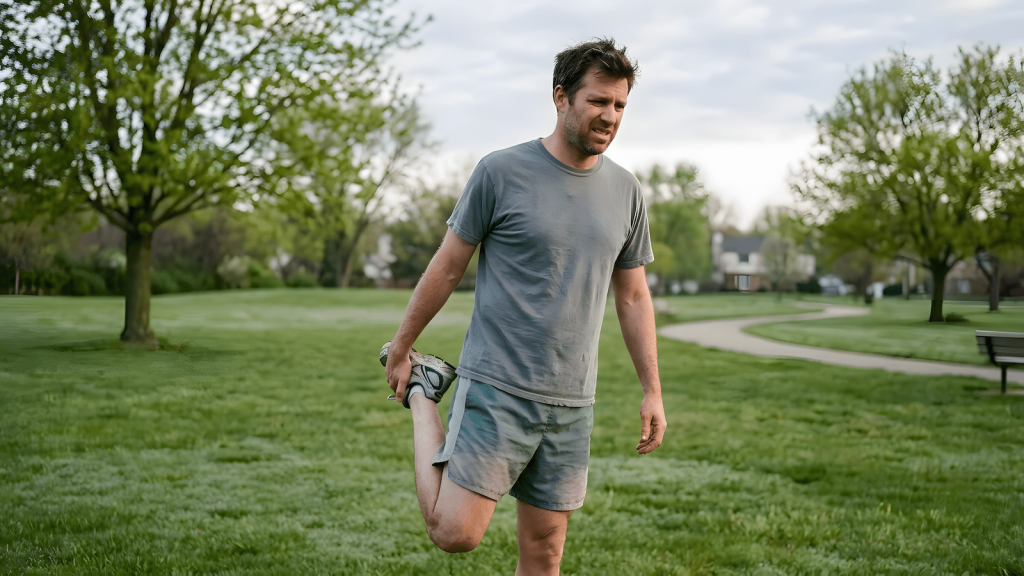
You didn’t injure yourself. You just stopped moving for a few months and your body adapted to exactly that.
This is one of those things nobody explains clearly. You get through winter mostly fine, then the weather shifts, you try to get back outside or restart a routine, and suddenly your knees are grinding, your hips feel locked, and your lower back has opinions about everything. It feels like something went wrong. Nothing went wrong. Your joints adapted to inactivity and now they’re protesting the return to load.
At 46, I’ve felt this pattern enough times to stop being surprised by it. Re-entry after a sedentary stretch hits differently now than it did at 30. The body adapts faster to inactivity as you get older, and it takes more intentional effort to bring it back online without paying for it for two weeks. This article is about understanding the mechanism because once you understand why it happens, the fix becomes obvious.
What Winter Actually Does to Your Joints
The first thing to understand is that joint pain after winter inactivity isn’t damage. It’s adaptation made visible.
When you’re sedentary for an extended period, and for most people winter means significantly less movement, several things happen simultaneously. Synovial fluid, the lubricant inside your joints, becomes less circulated and thicker. This is the fluid that keeps cartilage surfaces from grinding against each other. Less movement means less natural pumping of that fluid through the joint. When you start loading the joint again in spring, it’s working with reduced lubrication.
At the same time, the muscles that support your joints atrophy. After 40, muscle loss from inactivity happens faster than it did in your twenties. Your quads support your knees. Your glutes and hip abductors support your hips. Your core supports your lower back. When these structures weaken from three months of relative inactivity, the joints themselves absorb more load than they’re designed to handle. The support system got smaller while the demand stayed the same.
Connective tissue and fascia also stiffen. Fascia is the web of connective tissue that surrounds your muscles and joints. In cold weather and with reduced movement, it loses some of its elasticity. When you suddenly ask it to stretch and load again, it resists. The combination of reduced lubrication, weakened support structures, and stiffened fascia is why spring re-entry hurts even when you haven’t done anything technically wrong.
The Joints That Take the Most Damage
Knees take the biggest hit from winter inactivity and they’re the most common complaint when people start moving again in spring. The knee joint depends heavily on the quadriceps for stability. When quad strength drops, the knee bears more of the load directly, and the reduced synovial fluid means less cushioning during that load. The result is the grinding, aching sensation that shows up on the first few walks or runs.
Hips are the second major problem area, especially for people who work at desks. Extended sitting shortens and tightens the hip flexors, the muscles at the front of the hip that pull your knee toward your chest. After months of this, the hip joint itself moves with less range and more resistance. Combined with weakened glutes from all that sitting, the hip is both tight and unsupported when you start asking it to work again.
Lower back pain is almost always downstream of the above two. Weak glutes shift the load to the lumbar spine. Tight hip flexors pull the pelvis into an anterior tilt, compressing the lower back. It’s not really a back problem. It’s a hip and glute problem expressing itself in the back, which is why treating the lower back directly without addressing the hips and glutes is why lower back pain keeps coming back.
For people over 40, the recovery window is longer than it used to be. That’s not a reason to avoid movement. It’s a reason to sequence correctly.
The Spring Joint Reset: What Actually Works
The goal here isn’t to get fit. The goal is to bring your joints back online without aggravating them in the process. Five steps, in order.
Step 1: Lubrication before load.
Before you do anything else, you need to get synovial fluid moving again. This means gentle, low-impact movement like walking, light cycling, or swimming before you start asking your joints to bear real weight. The movement itself pumps fluid back through the joint. Don’t start with a run or a heavy leg session. Start with twenty minutes of walking every day for a week. That’s not the workout. That’s the preparation.
Step 2: Rebuild the support structures with resistance bands.
Once you’ve gotten some fluid moving, the priority is reactivating the muscles that protect your joints: quads, glutes, and hip abductors. You don’t need weights for this. A good set of resistance bands is enough to wake up atrophied muscle without overloading joints that aren’t ready yet.
The movements that matter most are banded squats, banded glute bridges, side-lying clamshells for hip abductors, and terminal knee extensions for quad activation. None of these are glamorous. All of them work. A loop resistance band set gives you enough variety to cover all of these at home without any other equipment. Start with the lightest resistance and add load only when the movement feels clean.
Step 3: Address the fascia with a foam roller.
Before and after movement, spend five to ten minutes on the areas that tighten most from winter: hip flexors, IT band along the outer thigh, quads, and the thoracic spine. Foam rolling isn’t stretching. It’s applying pressure to break up fascial adhesions and improve tissue quality. It should be uncomfortable but not sharp. Roll slowly, pause on tight spots, and breathe through it.
A high-density foam roller is one of the better investments you can make for joint maintenance because it addresses the connective tissue layer that stretching alone doesn’t reach.
Step 4: Supplement the gap.
Glucosamine and chondroitin are the two most studied supplements for joint cartilage support. They don’t work overnight. Expect four to eight weeks before you notice a difference, which means the time to start is now, not when your knees are already screaming. Omega-3 fatty acids also reduce joint inflammation and are worth adding if you’re not already taking them.
A glucosamine and chondroitin supplement taken consistently over spring will support the cartilage layer that takes the most wear during re-entry into activity. This isn’t a quick fix. It’s maintenance infrastructure.
Step 5: Protect while you rebuild.
While your support structures are coming back online, a compression knee sleeve during walks and light activity provides proprioceptive feedback and reduces the micro-swelling that comes with joint re-loading. This isn’t a crutch. It’s a tool for the transition period while the muscles catch up to the demand.
What Not to Do
Running before you’ve rebuilt quad and glute strength loads the knee joint with impact before it has adequate support. This is the most common mistake people make in spring. The urge to get back to cardio fast is understandable, but two weeks of progressive walking and band work before running will save you from two weeks of knee pain and forced rest.
Aggressive static stretching on cold joints increases injury risk. Stretching after movement when tissue is warm is fine. Stretching as your first activity of the day on stiff winter joints is how you strain something.
Sharp pain is different from normal re-entry discomfort. Dull aching and stiffness that eases within the first ten minutes of movement is normal. Sharp pain, pain that doesn’t ease with movement, or pain localized to a specific point on the joint is a signal to stop and investigate.
The Real Goal at 46
I’m not trying to perform. I’m trying to stay operational.
There’s a difference between training for an outcome like a race, a physique, or a number on a bar, and training to keep the machine running. At this age, for most people working desk jobs and managing real life, the second goal is more honest and more sustainable. The metric isn’t how much you can lift or how fast you can run. It’s whether your joints let you do what you need to do without becoming the loudest thing in the room.
Usable strength is the kind that still works when you’re tired, when you’re carrying groceries, when you’re on your feet all day. That’s what we’re rebuilding here, not peak performance, but functional capacity that holds up under real conditions.
The spring window is genuinely the best time to do this. The external conditions are cooperating: more daylight, warmer temperatures, natural motivation to be outside. Lubricate first, rebuild the support structures, address the connective tissue, supplement consistently, and protect while you transition. Your joints spent winter adapting to rest. Give them two to three weeks to adapt back to load, do it in the right order, and they’ll stop complaining faster than you expect.
If this resonated, the HealthyForge strength and recovery cluster has more on building usable strength after 40 and why rest days stop working when the problem isn’t rest.

Knees that click, hips that protest, and a full-time job that doesn’t care. Founded HealthyForge.com because fitness advice should come from someone who actually has to work around a body that’s been used hard. Writes about staying functional when peak performance was never the goal.
📱 Medium • Facebook • YouTube
Written for the resilient not the aesthetic.