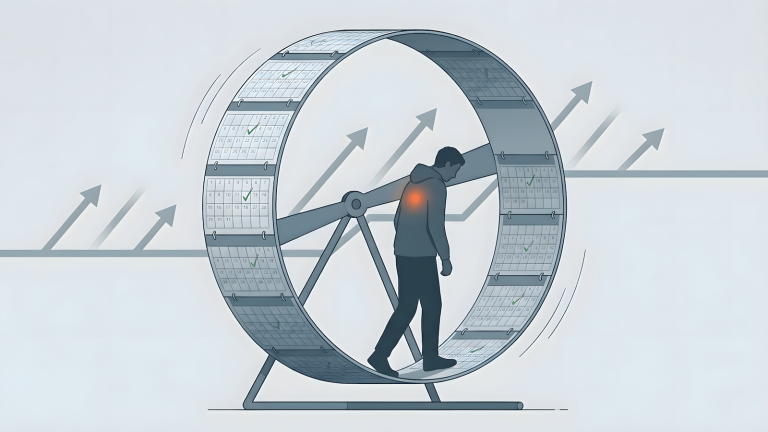
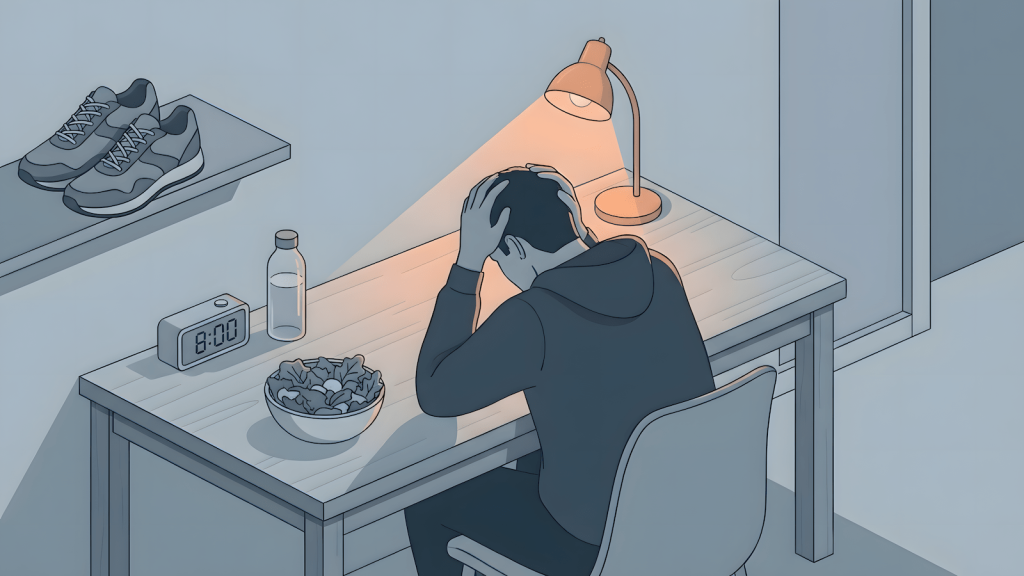
You’ve cleaned up your act. Fixed the sleep schedule, started drinking actual water instead of living on coffee, swapped the junk food for real meals, even started moving your body regularly. You’re doing everything the internet says you’re supposed to do.
And somehow you feel worse than before.
This is where most people spiral. They start questioning everything. Maybe I’m not trying hard enough. Maybe I missed something obvious. Maybe I’m just broken. But here’s the thing: you’re not failing. You’re experiencing something specific that almost nobody talks about.
Most health advice is written for people starting from nothing. It works great when your body is completely neglected, when you’re doing literally zero for yourself. But once you’re past that baseline? Those same changes stop helping. Sometimes they actually backfire.
Think about it. Your system is already maxed out. Long work hours, constant stress, sleep that technically happens but never feels restful. Now you’re adding more demands on top of that. Better habits, sure, but they’re still demands. You’re piling inputs onto a system that never gets a chance to actually reset.
This is why you end up with weird contradictions. You sleep eight hours but wake up exhausted. You eat cleaner but have less energy than when you were eating garbage. You work out consistently but you’re sore all the time and getting headaches. The effort is absolutely real. The results just aren’t there.
What’s actually happening is pretty straightforward: you’re fixing surface-level stuff while the real problem sits underneath, untouched. Drinking more water doesn’t fix sleep that’s fragmented all night. Stretching doesn’t address recovery debt that’s been building for months. Eating vegetables doesn’t calm down a nervous system that’s been running hot for years.
For a lot of people, the real issue is sleep that looks perfect on paper but never actually does its job. You’re in bed for eight hours, but your sleep is shallow, broken up, never reaching the deep stages where your body actually repairs itself. Duration isn’t quality, and fragmented sleep quietly destroys everything else you’re trying to build. If that sounds familiar, you need a structured approach to actually fixing sleep architecture, not just going to bed on time.
Other people are running entirely on stimulation instead of real energy. Caffeine keeps you functional, but the crashes get worse and you never fully recover between them. At a certain point, caffeine stops being helpful and starts hiding the actual problem. You need a strategy that lets you step down without falling apart.
And then there’s the simplest issue that somehow flies under everyone’s radar: chronic depletion. Not just dehydration, but actual electrolyte loss that builds up over weeks and months. This is what causes persistent fatigue, headaches, brain fog, especially when you’re under any kind of stress. Water alone doesn’t touch it.
If any of this is hitting close to home, the answer isn’t to add more habits or try harder. The answer is to pick the one system that’s actively failing to recover and fix that first. Just one. Not all of them at once.
That’s usually where things finally start moving again.

Coffee drinker, bacon enthusiast, occasionally writes about not dying tired.
I spent years doing “all the right things” and feeling worse. Turns out surface fixes don’t touch system failures. Founded HealthyForge.com to help you identify the one bottleneck that’s actually blocking your recovery.
📱 Medium • Facebook • YouTube
Written for the resilient not the aesthetic.