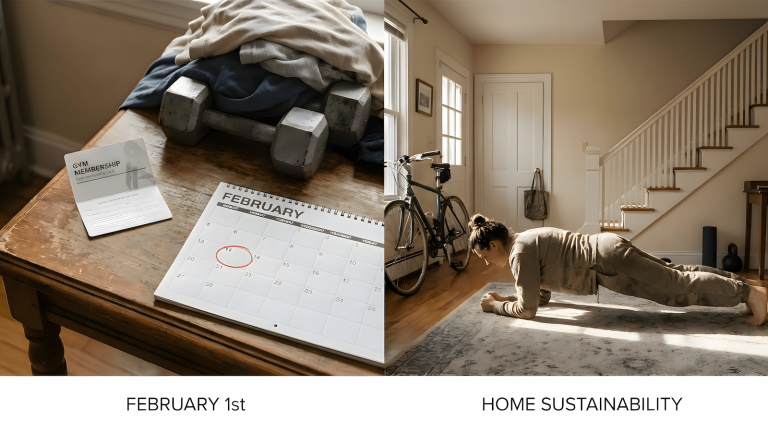
Most men don’t lose strength as they age. They lose posture, endurance, and tolerance for fatigue and then mistake that for weakness.
That distinction matters, because chasing “strength” the wrong way after 40 often makes things worse. You can lift more and still feel fragile. You can look fit and still feel slow, tight, or constantly tired. You can even work out regularly and watch your posture collapse anyway.
What’s missing isn’t effort. It’s usable strength.
The difference between strength and usefulness
Gym strength is built in controlled conditions.
The load is fixed. The path is predictable. The surface is flat. Failure costs nothing.
That’s not a criticism. It’s just reality.
Real life doesn’t work like that.
Real loads shift. Leverage changes. Fatigue shows up early. Posture breaks before muscles do.
That’s why someone who looks strong can struggle with awkward, real-world tasks, while someone who does physical work daily moves efficiently without looking “big.” One body is trained for peak output under ideal conditions. The other is trained for repeatable output when conditions are messy.
After 40, life is mostly messy.
Why usable strength looks “quiet”
This is why calisthenics athletes, fighters, and long-term manual workers tend to look the same at rest: compact, upright, balanced. They don’t look pumped. They look ready.
Their muscles aren’t decorative. They’re doing work even when nothing dramatic is happening:
- stabilizing joints
- holding posture
- managing balance
- resisting collapse under fatigue
That’s also why you’ll see older military men who still stand tall decades after service. That posture isn’t confidence alone. It’s structural. It was trained daily, under load, long before it became noticeable. Some people use creatine supplements to support strength and recovery as they get older, but it’s optional not a requirement.
Posture isn’t something you remind yourself to fix. It’s something that stops failing when the support systems are strong enough.
Why posture collapses first, not strength
Most people don’t slouch because they’re lazy or weak.
They slouch because:
- glutes stop contributing
- deep core stops stabilizing
- shoulders drift forward under fatigue
- sitting becomes the default position
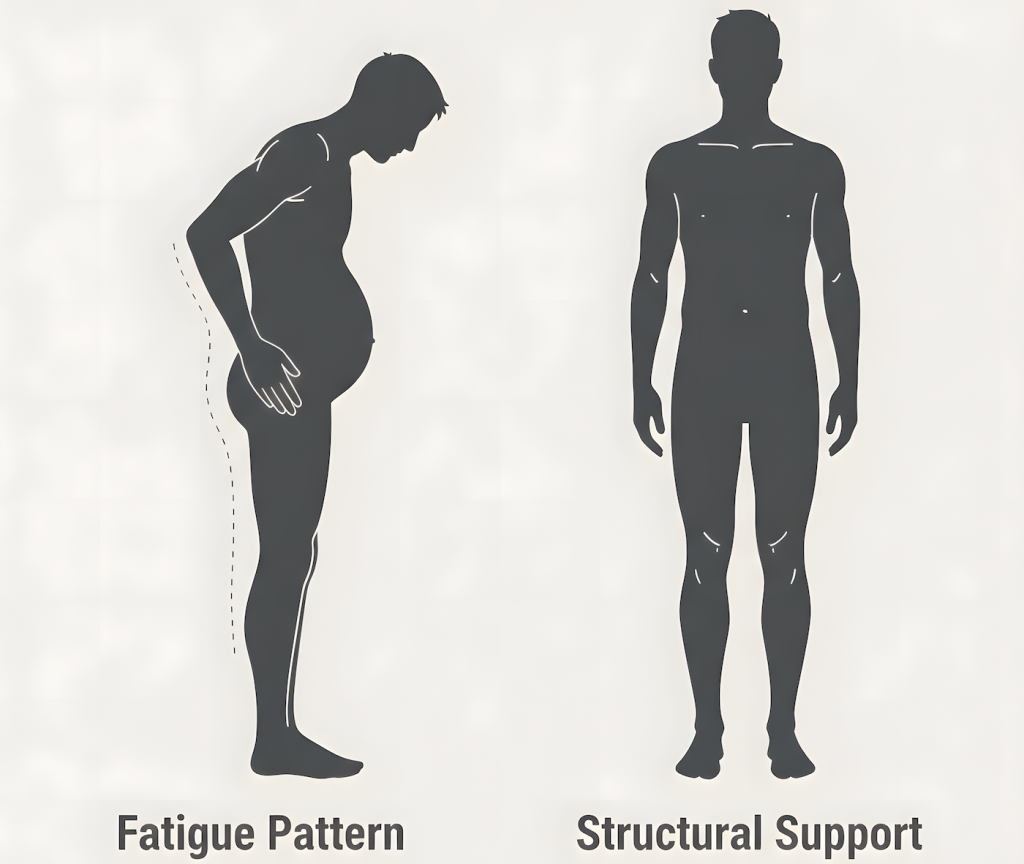
When fatigue shows up, posture pays the price first. That’s when the stomach starts to bulge, the neck creeps forward, breathing gets shallow, and everything feels heavier than it should.
This is why posture problems are tied so closely to:
It’s not cosmetic. It’s systemic.
Why flattening the stomach isn’t about abs
A protruding midsection after 40 is rarely just fat.
More often, it’s:
- anterior pelvic tilt
- undertrained hips
- weak deep core
- prolonged sitting
Crunches train movement. They don’t train resistance to collapse.
Standing work, controlled load, hip engagement, and breathing under tension do far more to flatten the stomach over time not because they burn fat, but because they restore alignment.
When alignment improves, the stomach doesn’t need to be “held in.” It just stops pushing forward.
Endurance comes from systems, not willpower
Endurance isn’t about pushing harder. It’s about not degrading early.
In daily life, work, stress, and intimacy, endurance depends on:
- hips that can generate force repeatedly
- a core that stabilizes instead of locking up
- breathing that stays controlled under effort
- posture that doesn’t collapse when tired
That kind of endurance isn’t built through heroic sessions or performance tricks. It’s built through moderate, repeatable stress that the body learns to manage without panic.
This matters even more when blood pressure, recovery, and long-term health are part of the equation.
Why short, repeatable effort beats “perfect programs”
The biggest lie in fitness is that progress comes from intensity.
It doesn’t. It comes from exposure over time.
Short, repeatable sessions that don’t create dread:
- train posture under fatigue
- maintain joint tolerance
- regulate stress
- support cardiovascular health
- keep movement available
A routine that fits into real life compounds quietly. One that demands constant motivation dies early.
This is why people who stay capable into their 60s and 70s aren’t usually the ones who trained hardest. They’re the ones who trained consistently without breaking themselves.
Fitness as optimization, not escalation
You don’t replace a working tool just because benchmarks say it’s outdated. You replace it when it stops doing the job.
The same applies to your body.
A body that:
- moves well
- recovers quickly
- stays upright
- handles fatigue
is still a functioning system.
Usable strength isn’t about being the strongest person in the room. It’s about still being capable when the room doesn’t care how you trained.

The HealthyForge reality
You don’t need:
- bulk
- six-pack abs
- gym identity
- extreme programs
You need:
- posture that survives long days
- strength that transfers outside workouts
- endurance that doesn’t spike stress
- movement that stays available as you age
That kind of strength doesn’t announce itself. It just shows up every day.
And that’s the kind that lasts.
Related Reading:
- The Dad Bod Reality: Why Migraines and Hypertension Hit Together
- Not Lazy, Just in Survival Mode
- Sexual Health Is a Cardiovascular Issue
- The Unsexy Truth About Fat Loss

Survival-First Wellness Strategist & Tactical Health Writer
I write about usable strength, the kind that still works when you’re tired, sitting too long, or managing hypertension after 40.
No performance aesthetics. No Instagram abs. Just systems that keep working when life gets messy.
If you’re a tech worker, remote professional, or someone tired of feeling tired, this is where practical recovery meets real-world endurance.
Part of the CTRL+ALT+SURVIVE network covering work stress, mental regulation, environment optimization, and hands-on builds for sustainable health under tech workloads.