Some links on this page are Amazon affiliate links. If you choose to buy through them, HealthyForge may earn a small commission at no extra cost to you.
These links only appear where tools or everyday support items naturally fit the topic. No paid placements. No miracle cures.
You’re not tired because you worked hard. You’re tired because you never actually recovered.
And no, a new pillow isn’t going to save you if your sleep cave is set up like a sensory torture chamber.
The average tech worker spends 8 hours trying to function on 5 hours of trash sleep, then wonders why caffeine, discipline, or productivity hacks aren’t cutting it.
What’s Broken: You Treat Sleep Like a Recharge, Not a Reboot
Sleep isn’t a break. It’s a system-level reset. But most people try to fall asleep in the middle of:
- A glowing room
- Background YouTube or Discord noise
- Heat, light, clutter, and EMF soup
You wouldn’t run a production deploy in that kind of environment. Stop sleeping in one.
Why It Matters: Sleep Is When Your Brain Takes Out the Trash
Real sleep cycles do things your conscious hours can’t:
- Flush metabolic waste (actual brain cleaning)
- Lock in memory consolidation (you learn while sleeping)
- Reset hormonal regulation (cortisol and insulin included)
Your body doesn’t rest. It works. And if the environment sucks, so does the output.
Ignore: Biohacks and Expensive Sleep Toys
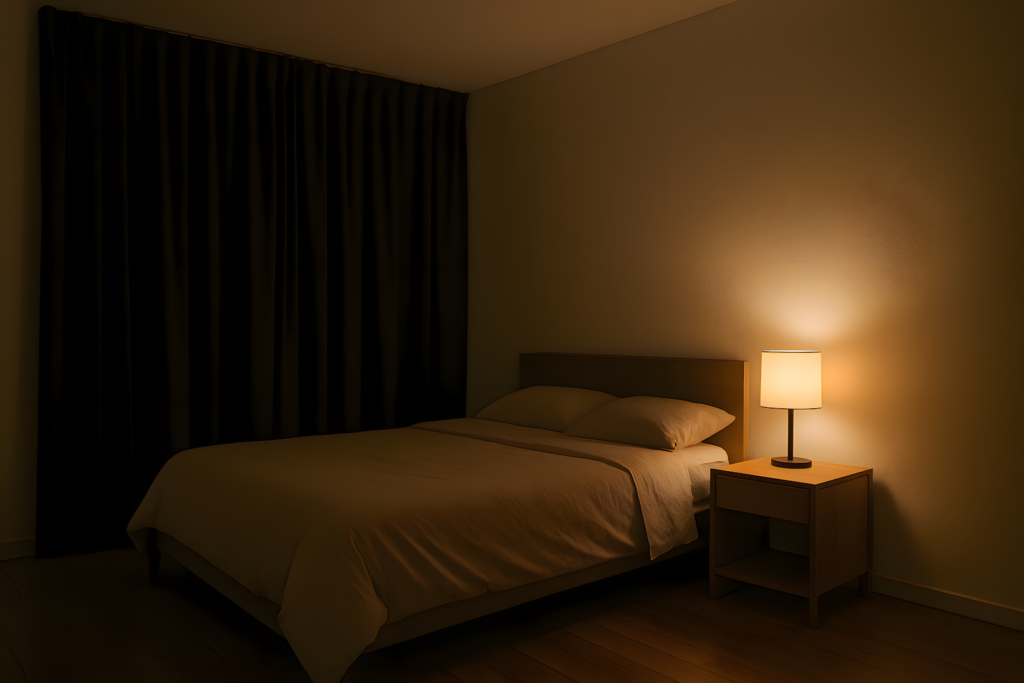
You don’t need a cold-plunge tank and three supplements. You need the sleep cave that your animal brain understands:
- Dark
- Quiet
- Cool
- Safe
You can’t logic your way to sleep. You have to trick your nervous system into letting go.
If your mind won’t shut down after lights out, a small dose of L-theanine does more than scrolling yourself into insomnia. And no, you don’t need a 10mg melatonin nuke.
When you can’t fully control ambient light, a sleep mask becomes the simplest way to block residual brightness without changing the entire room.
For sudden or unpredictable noise you can’t engineer away, basic earplugs are often enough to reduce sleep-breaking spikes without adding complexity.
What to Do: Rebuild the Cave
This isn’t feng shui. It’s field-tested survival logic.
Tactical Checklist:
- Blackout: Curtains, electrical tape over LEDs, no glow
- Noise: Max = 45 dB (about the sound of a quiet fridge or light rain). White noise or fan hum = fine. Discord stream = no.
- Temperature: 24–25°C (75–77°F) if you live in warm regions. If it feels “cool enough for a thin blanket,” you’re close.
- Airflow: Quiet fan or cracked window. No stagnant air.
- Bed Zone: Nothing under the bed, nothing overhead, no visual clutter
- Lighting Protocol: Red or amber light 1 hour before sleep
Train your brain that the cave = shutdown mode.
Extend With Gear (Only If You’ve Done the Basics)
- Sleep mask (zero light leaks)
- Smart plug for auto-kill of overhead lights/screens
- Grounding mat (if EMFs are your enemy)
- Weighted blanket (if anxiety runs hot)
- Humidifier (if you’re in AC zones or dry air)
These are force multipliers, not fixes.
When to Link Out
- If your workspace is part of the sleep problem, backtrack to RWH: Your Home Office is a Control Room
- If your mind won’t shut up even in ideal conditions, reroute to MmP: You’re Not Lazy—You’re Running an Outdated Mental OS
Sleep isn’t optional. It’s the thing everything else depends on. Fix your cave. Or keep crashing mid-sprint wondering why your systems keep failing. If this feels abstract, start with the physical setup first. Fix Your Sleep Cave breaks down how to make your bedroom work with your nervous system instead of fighting it.
Your cave is not aesthetic. It’s a protocol. Set it up like one.

Survival-First Wellness Strategist & Tactical Health Writer
Founder of HealthyForge.com, a site focused on rebuilding energy, sleep, and resilience through systems not supplements or hype. Writes for people who are functional but worn down, and need fixes that survive real life.