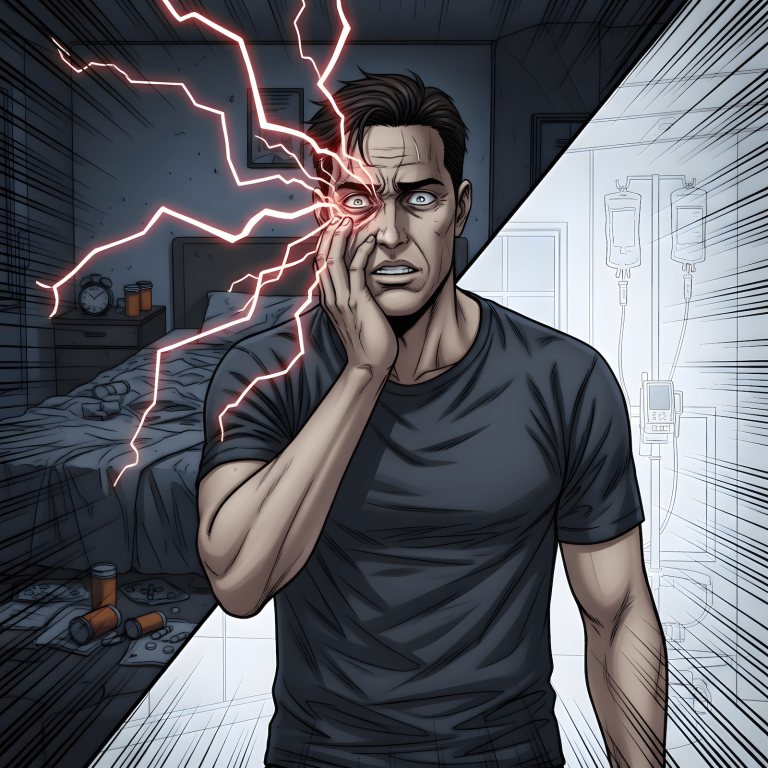
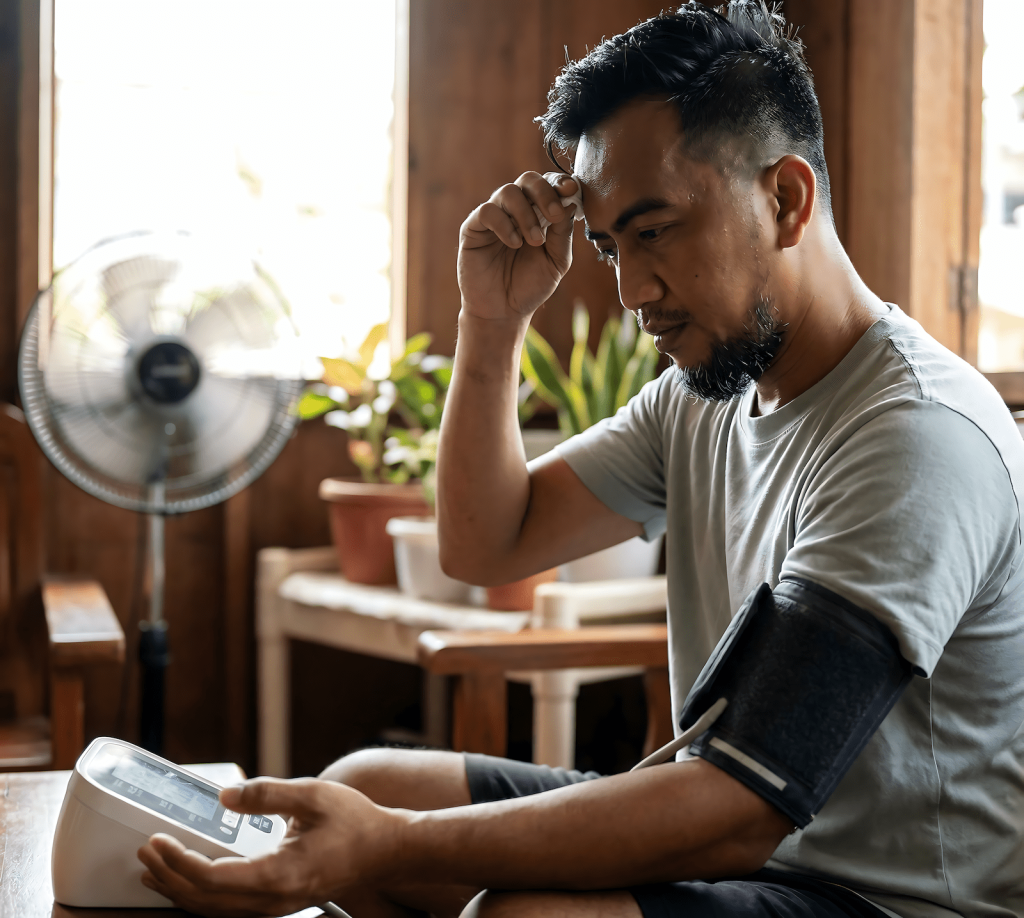
It was the middle of the afternoon. I was inside the house, not doing anything strenuous, and I couldn’t catch my breath. No exertion. No direct sun. Just a Philippine summer afternoon where the ambient temperature had already crossed 35°C and the air inside had turned into something closer to a slow oven. I checked my BP: 179/92. That number doesn’t lie, and it doesn’t wait. High blood pressure in hot weather doesn’t need you to be outside for it to find you.
This isn’t a general summer safety post. This is what happened, what the numbers were, what I did, and what it means if you’re managing hypertension on maintenance medication and you think “controlled” means you’re safe from heat-related BP events. You’re not.
What Heat Actually Does to Your Blood Pressure
The Cardiovascular Load Nobody Explains
Your cardiovascular system has one job in high heat: keep your core temperature from cooking your organs. To do that, it pushes blood toward the surface of your skin so heat can escape. Blood vessels near the skin dilate. Your heart rate goes up to compensate for the redistribution. Your heart is now working harder than it would be at rest, not because you’re moving, but because it’s managing a thermal emergency.
For someone without hypertension, this is uncomfortable but manageable. For someone already running on a hypertensive baseline, the math is different. Your heart starts the day already working against elevated resistance. Add heat, and you’re stacking load on a system that has less margin than a normotensive person. The BP reading that results isn’t just a number: it’s your body broadcasting how hard it’s working to maintain equilibrium.
The mechanism isn’t complicated, but most people with hypertension never hear it explained this way. They’re told to “stay cool” and “drink water” without understanding that by the time they feel the need to act, the process is already well underway.
Why “Controlled” Does Not Mean “Protected”
What Maintenance Medication Actually Does in Heat
There’s a comfort that comes with being on maintenance medication and getting reasonable readings at your regular checkup. 120/80 at the clinic feels like evidence of a problem solved. It isn’t. It’s evidence of a problem managed under baseline conditions, and summer heat is not a baseline condition.
Amlodipine, which is what I take, is a calcium channel blocker. It helps relax blood vessels. In theory, this should help in heat. In practice, when dehydration reduces blood volume, the medication is working against a moving target. Less fluid in circulation means the heart has to pump harder to maintain pressure to the organs, even as the medication is trying to lower that pressure. The result is unpredictable: you can spike, you can drop, or you can swing between both as the afternoon progresses.
Clopidogrel adds another layer. It’s a blood thinner, which means it’s designed to prevent clotting. When you’re dehydrated, blood thickens naturally as plasma volume drops. Your body is now running a blood thinner against blood that is becoming more concentrated. That’s not a catastrophic conflict, but it’s a reason your cardiovascular system is doing more work than your morning reading suggested.
If you’re on a statin alongside these, as I am with atorvastatin, the primary concern isn’t the heat directly. But statins require adequate hydration to metabolize efficiently. On a day where you’re already running low on fluids, it’s one more variable that doesn’t help.
The No-Sweating Trap
Why Silence Is the Worst Warning Sign
Here’s what I noticed, and what I want you to file as the actual red flag: I wasn’t sweating.
Most people interpret the absence of sweating as a sign that they’re not that hot, that their body is coping, that they don’t need to worry yet. That interpretation is backwards. Sweating is your body’s active cooling mechanism. When it stops in a hot environment, it doesn’t mean the heat threat is gone. It means your body’s ability to respond to that threat is compromised.
In heat exhaustion trending toward heat stroke, sweating ceases not because you’ve cooled down but because the system is failing. Your internal temperature continues to rise. Your cardiovascular system continues to strain. But you get no visible signal that anything is wrong. You feel warm, maybe breathless, possibly a headache. Nothing that screams emergency. That’s what makes it dangerous.
If you are outside or inside in significant heat and you notice you’ve stopped sweating, that is the moment to take action, not wait and see. Get cool water. Get to a cooler environment. Check your BP if you have a monitor. Do not push through it.
High Blood Pressure in Hot Weather and Dehydration: How They Compound
The Urine Color Test Nobody Mentions to Hypertensives
Dehydration on a hot day isn’t just about thirst. By the time thirst registers, you’re already behind. The body prioritizes organ function over thirst signaling, so the alert comes late. The earlier warning, and the one I should have acted on faster, is urine color. Mine was notably darker than normal, which is a reliable early indicator that plasma volume is dropping.
When blood volume decreases, the heart compensates by beating harder and faster. This is a direct path to elevated BP. Add heat-induced vasodilation to the mix, and you have a system that’s simultaneously trying to lower peripheral resistance and maintain organ perfusion with less fluid to work with. The result, in my case, was a systolic reading that jumped well above my normal controlled range.
Water helps, but water alone doesn’t replace what you lose through heat exposure. Sodium and potassium leave with fluid. When electrolytes drop, nerve and muscle function, including cardiac muscle, becomes less efficient. Coconut water is the most accessible fix in a Philippine context: it’s isotonic, it contains meaningful potassium and sodium, and it doesn’t require any preparation. One in the morning and one in the early afternoon on hot days is a reasonable protocol, not as a cure but as maintenance.
What the Numbers Looked Like in Real Time
179/92 to 129/74: What a Heat-Driven Spike Actually Looks Like
To make this concrete: my BP earlier in the day was 179/92. That is a stage 2 hypertensive reading by any clinical standard. I was inside. I was not exerting myself. The primary variables were heat, dehydration, and a hypertensive baseline.
After a cold bath and rest as the temperature dropped at sunset, my reading came down to 129/74. That is a 50-point systolic drop inside a few hours. The cold bath accelerated what my body couldn’t do on its own: it forced the external cooling that sweat was no longer providing, which reduced the cardiovascular load, which allowed the BP to come down.
This is what high blood pressure in hot weather actually looks like from the inside. Not a dramatic collapse. Not a clear emergency moment. Just a slow pressure build in a house that got too warm, on a body that was already working harder than its numbers suggested.
What I Did and What Actually Worked
Cold Bath, Rest, and Not Panicking
The cold bath was the immediate intervention and it worked. It’s not a trick: it’s physics. Lowering skin temperature reduces the heat the cardiovascular system has to manage, which reduces cardiac load, which allows BP to drop. If you don’t have air conditioning, a cold bath or cold wet towels on the neck and wrists are functional alternatives.
Beyond that: rest in a horizontal position, continued hydration with electrolytes, and monitoring. I didn’t take an additional dose of anything. I didn’t panic. I watched the numbers come down as the environmental conditions changed and let the body do what it does when the stressor is removed.
What I’ll do differently going forward is earlier intervention. Hydrate before noon. Monitor urine color as the first alert, not breathlessness. And if sweating stops in the middle of a hot afternoon, treat that as an action signal rather than a neutral observation.
If You’re on Amlodipine, a Statin, or a Blood Thinner in Summer
The Conversation to Have With Your Doctor Before Peak Heat
Talk to your doctor about your summer protocol specifically. This isn’t generic advice: it’s a real conversation to have. Ask whether your current dosage accounts for the additional cardiovascular load that extended heat exposure creates. Ask whether there are any known interactions between your specific medications and dehydration. Ask what BP threshold should trigger a call or a visit.
For amlodipine users specifically: the medication does some of the vasodilation work that your body is also trying to do in heat. This can sometimes result in a BP drop rather than a spike, particularly if dehydration is severe. Dizziness or lightheadedness on a hot day, especially when standing up, can be a sign of this. It’s worth knowing which direction your body tends to go.
For clopidogrel users: keep hydration a priority not just for BP but because blood viscosity matters. The thinner has a harder job when the blood it’s working with is more concentrated. None of this replaces a conversation with your cardiologist or internist, but it gives you better questions to bring.
The Protocol Going Forward
What a Conscious Hypertensive Does Differently in Summer
Summer in the Philippines is not a season you manage reactively. It requires a small set of deliberate habits that run in the background from March through June.
Hydrate before you feel thirsty, and use urine color as your calibration tool. Pale yellow means you’re on track. Anything darker means catch up now. Add coconut water or a reliable electrolyte source mid-morning on days above 33°C. Monitor your BP if you have a home monitor, and note the time of day alongside the reading because afternoon spikes matter even if your morning reading was clean. If you stop sweating in heat, act on it immediately. And if your reading crosses into the 160s or higher, rest, cool down, and contact your doctor if it doesn’t come down within an hour.
High blood pressure in hot weather is manageable. But it requires you to stop treating “controlled hypertension” as a permanent state and start treating it as a baseline that needs active defense when the environment changes.